


A report by the monitoring team established by the United Nations Security Council has revealed that the intensity and number of attacks by the Tehreek-e-Taliban Pakistan (TTP) in Pakistan have increased due to the continued support of the Afghan Taliban.
According to the report, despite some initial measures taken by Kabul, operational links among the TTP, Al-Qaeda, Islamic State Khorasan (IS-K) and the Balochistan Liberation Army (BLA) are also deepening. Experts say the report presents a clear picture of the expanding terrorist network in the region.
What does the UN report say?
The 38th report of the UN Analytical Support and Sanctions Monitoring Team, covering the period from December 16, 2025, to June 9, 2026, states that cross-border attacks between Pakistan and Afghanistan have increased.
The report says the main reason was the large number of attacks carried out by the TTP against Pakistan. As in previous reports, the latest assessment takes a clear position on Kabul’s role, stating that the Taliban administration in Afghanistan has continued to support the TTP, resulting in an increase in attacks against Pakistan and even military confrontation between the two countries.
Member states expressed concern that the continuing tensions could provide terrorist groups with further opportunities and create additional security challenges for the region.
Taliban’s dual strategy
The report also mentions some initial measures taken by Taliban authorities to control the TTP. However, according to the experts, these steps appear to be an attempt to manage the group in an organized manner rather than completely eliminate it.
According to the report, Afghan authorities relocated around 2,000 TTP fighters and their families from areas near the Pakistani border to the interior of Afghanistan.
The report further states that Taliban leader Hibatullah Akhundzada, through behind-the-scenes contacts, warned the TTP leadership that if attacks against Pakistan did not stop, they could lose Taliban support.
These developments reflect what appears to be a dual strategy by the Taliban: on the one hand, providing the TTP with support and space because of ideological ties, while on the other, relocating some fighters away from the border in an effort to avoid a major confrontation with Pakistan and reduce international concerns.
From Pakistan’s perspective, however, simply relocating fighters internally cannot resolve the issue as long as the TTP’s command, training and logistical networks remain intact.
TTP’s new organizational structure
According to the report, the TTP is continuing to expand its organizational structure and operational reach. Following its annual Rahbari Shura meeting held in December, the group announced a new structure that included separate new branches for Balochistan and the central region, as well as Kashmir and Gilgit.
The reorganization also included a new branch that the group itself called an “Air Force,” indicating an attempt to expand its operational capabilities.
In March, the group announced its spring campaign in multiple languages, calling for an increase in attacks against Pakistani security forces and civilians.
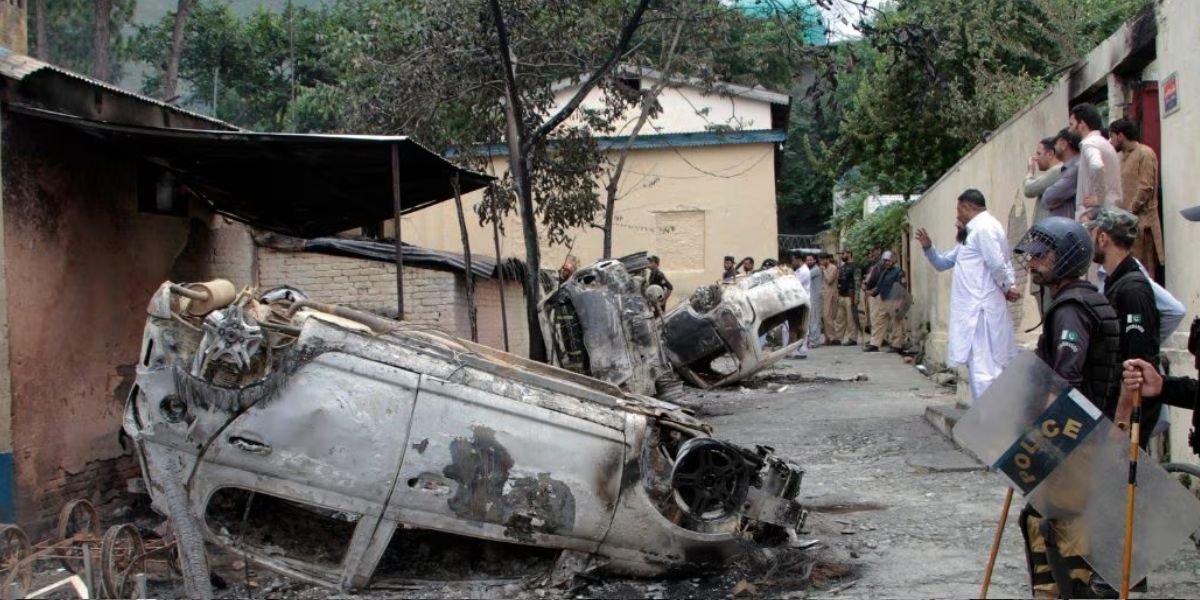
The deadliest attack during the period under review occurred in Bajaur on February 16, when a vehicle-borne explosive device killed 11 security personnel and a child and wounded several others. The TTP claimed responsibility for the attack, which the report said was carried out from Afghanistan.
Blurring lines among terrorist groups
The UN assessment also highlights growing links among terrorist groups operating in and from Afghanistan.
Al-Qaeda’s official media outlet issued a statement on April 28 supporting the Taliban and, for the first time, openly expressed support for TTP attacks against Pakistan.
According to the report, although Al-Qaeda has previously provided ideological guidance, training and assistance to the TTP, the latest statement represents more direct support.
The report, citing a member state, also said that elements of the BLA were trained in Afghanistan by Al-Qaeda trainers alongside the TTP.
In addition, Al-Qaeda’s South Asian branch played a key role in the formation of the Ittehad-ul-Mujahideen Pakistan, which has been involved in several attacks in Khyber Pakhtunkhwa.
According to the report, the branch’s leadership continued to reside in Kabul even after the publication of listings against them, indicating close cooperation between the Taliban and the group.
ISKP: The biggest threat
According to the report, ISKP remains the biggest threat to the Taliban government and the region, although counterterrorism operations by Pakistan and the Afghan Taliban have inflicted significant damage on the group.
The group has shifted its operational structure toward northern Afghanistan, while its training networks have expanded into border areas between Khyber Pakhtunkhwa and Afghanistan. Its presence also remains in the outskirts of Kabul.
The report says ISKP is currently in a reorganization phase, adopting a strategy of fewer but larger-scale and high-casualty attacks rather than attempts to seize territory.
According to member states, the group possesses advanced technical equipment, including drones, night-vision devices and thermal imagers, and has received training in urban warfare tactics and drone use.
A member state also reported that ISKP and the BLA share logistical networks.
According to the report, ISKP attacks have decreased in Afghanistan but increased in Pakistan. On February 6, a suicide bomber detonated explosives during Friday prayers at the Khadija-tul-Kubra Mosque in Islamabad, killing 32 people and injuring more than 150.
The attack was claimed by a group calling itself Islamic State Pakistan. However, according to the report, the attack was likely carried out by IS-K. The group also claimed responsibility for the killing of Pakistani religious scholar Sheikh Muhammad Idris in Khyber Pakhtunkhwa on May 5.
Relations between Pakistan and the Afghan Taliban have steadily deteriorated since the Taliban returned to power in 2021.
Islamabad has long accused the TTP of maintaining safe havens on Afghan soil, while Kabul has repeatedly denied the allegations.
The UN report is an important documented reference in this dispute because it was prepared through an internationally recognized monitoring mechanism. Growing links among other militant groups operating in the region, including IS-K and the BLA, have further complicated the security situation.
Is the Taliban’s strategy merely a show?
The UN report indicates that measures taken by the Taliban, such as relocating fighters and warning the TTP leadership, may be symbolic efforts to reduce pressure rather than a serious plan to completely eliminate the banned TTP.
As long as the group’s command structure, training centers and logistical networks remain intact, relocating several thousand fighters away from the border is unlikely to provide Pakistan with meaningful relief.
Some observers believe the report provides sufficient grounds for the international community to pursue a policy of further isolating the Taliban government rather than seeking avenues for cooperation. Other experts, however, disagree and favor a negotiated approach.
The growing operational links among Al-Qaeda, IS-K and the BLA indicate that the regional problem is no longer limited to the TTP but has evolved into a broader militant network.
In such circumstances, diplomatic pressure alone may prove insufficient for Pakistan, increasing the need for a comprehensive regional strategy to address the security situation.
Also Read: Mohsin Naqvi meets Iran’s top leadership, delivers special message from Islamabad