


Web Desk: Punjab’s government unveiled a tax-free and surplus budget for fiscal year 2026-27 on Tuesday, pledging higher spending on development, health, education and social welfare while avoiding major new burdens on consumers, as opposition lawmakers disrupted the provincial assembly session with loud protests.
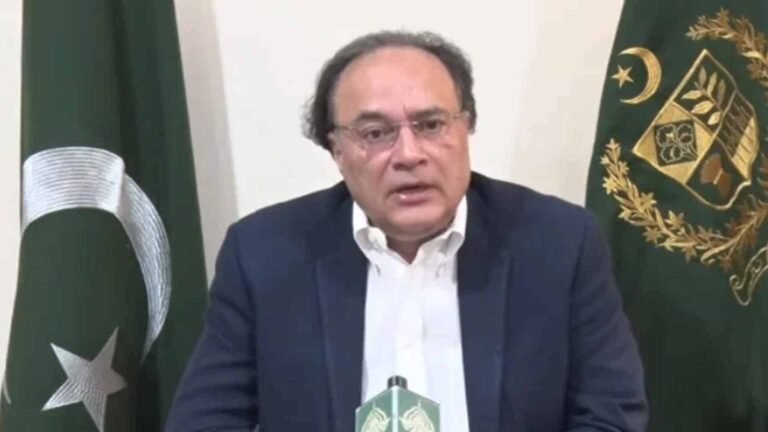
Provincial Finance Minister Mujtaba Shuja-ur-Rehman presented a 5.903 trillion rupee budget in the Punjab Assembly, describing it as a balanced fiscal plan focused on economic stability, governance reforms and public relief.
The budget includes a 7% increase in salaries for provincial government employees and a 3.5% rise in pensions.
However, the budget session was overshadowed by opposition protests. Members of the opposition chanted slogans demanding the release of former Prime Minister Imran Khan and held placards as they entered the assembly chamber. The protests intensified when the finance minister began his speech, with opposition lawmakers gathering in front of the speaker’s dais and rejecting what they called a “fake budget.”
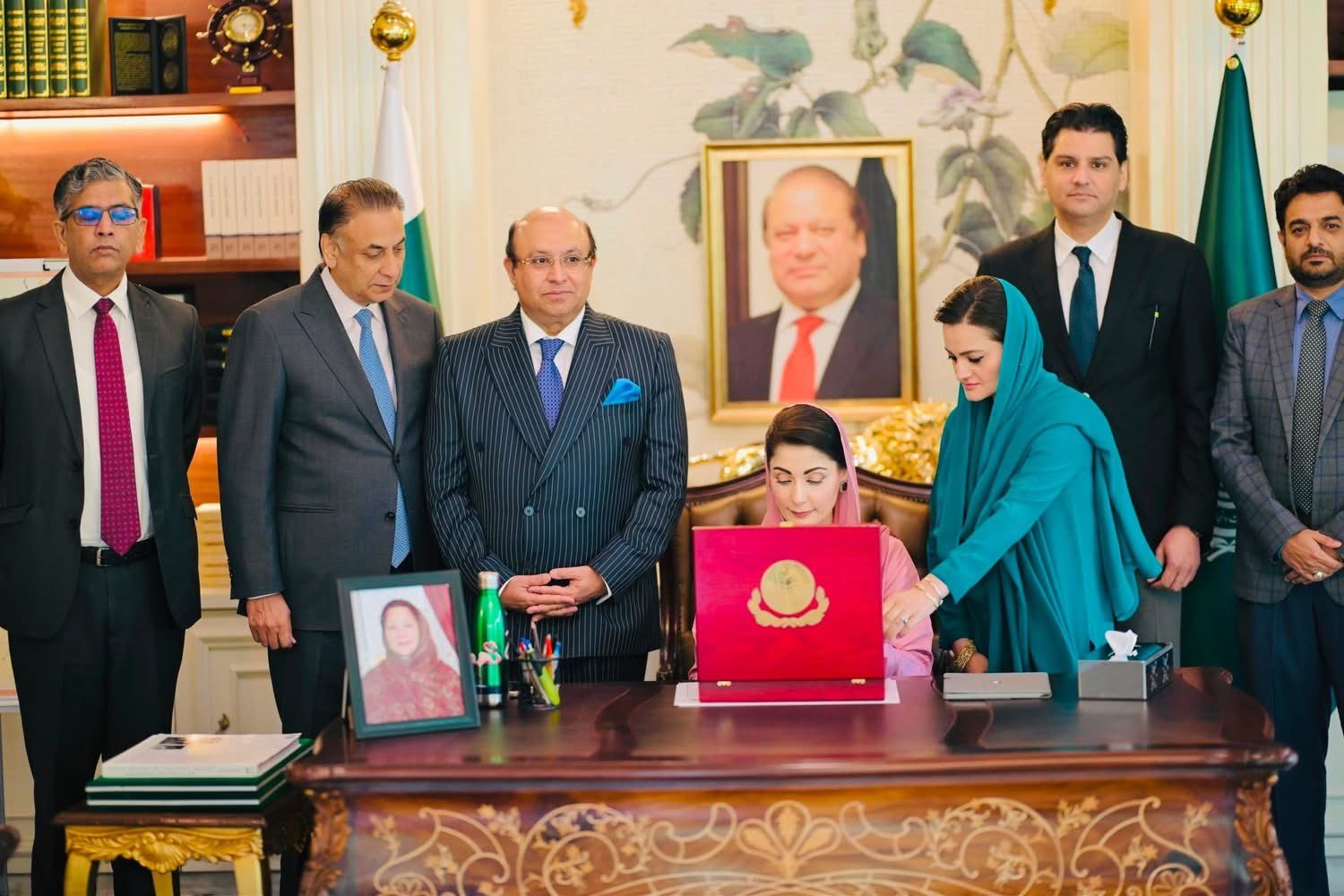
Government lawmakers formed a protective cordon around Chief Minister Maryam Nawaz and the finance minister during the proceedings.
Presenting the budget, Shuja-ur-Rehman said the provincial government had prioritized fiscal discipline and austerity despite economic pressures, regional tensions and natural disasters during the outgoing fiscal year.
He said Punjab had reduced government expenditures, restricted board meeting fees, promoted online meetings and cut other non-essential spending. Salaries of the chief minister, provincial ministers, advisers and parliamentary secretaries were reduced for two months, while lawmakers’ salaries were cut by 25% for the same period.
According to the finance minister, savings generated through those measures were redirected toward public relief initiatives that benefited more than 47 million people.
The government also contributed 546 billion rupees toward federal requirements, including national development and strategic priorities, making Punjab the largest contributor among the provinces.
Punjab proposed a development budget of 752 billion rupees for the next fiscal year, with allocations spread across infrastructure, social services, governance, climate resilience and productive sectors.
The government earmarked 334 billion rupees for social sector development, 117 billion rupees for infrastructure projects, 103 billion rupees for production-related sectors, 86 billion rupees for services and 39 billion rupees for climate and ecology initiatives.
Officials said Punjab’s gross domestic product increased by 9.27 trillion rupees over the past year, reaching 70.9 trillion rupees in fiscal year 2025-26 from 61.7 trillion rupees a year earlier.
Meanwhile, the government announced a three-year economic transformation plan involving nearly 1.995 trillion rupees in public and private investment. The initiative targets industry, agriculture, livestock, tourism, technology and workforce development.
Authorities expect the program to generate $6.8 billion in additional exports, create 162,000 jobs and train more than 850,000 skilled workers.
The budget allocates 39 billion rupees for youth development programs focused on education, skills training, entrepreneurship and employment opportunities.
The government also plans to expand its housing initiatives. Officials said more than 173,000 housing loans had already been issued under the “Apni Chhat, Apna Ghar” program, resulting in the construction of more than 101,000 homes.
For the coming fiscal year, Punjab plans to provide 300 billion rupees in interest-free loans to around 200,000 beneficiaries under the scheme.
In addition, the government allocated funding for social protection programs, including ration cards, minority welfare initiatives, livestock support and women-focused assistance schemes.
Education received one of the largest allocations in the budget at 750 billion rupees, while health spending was set at 506.2 billion rupees.
The government announced funding for new medical infrastructure, including a cancer hospital in Dera Ghazi Khan, upgrades to teaching hospitals, cardiac treatment facilities in district hospitals and modernization of healthcare equipment.
Officials also allocated funds for student hostels, hospital renovations and digital health management systems.
Punjab increased spending on environmental protection and anti-smog measures, allocating 17.2 billion rupees for climate and environmental projects.
The package includes funding for air and water quality monitoring systems, a climate observatory, environmental laboratories, anti-smog initiatives and the establishment of environmental protection forces across 10 zones.
Authorities said the projects aim to reduce pollution and improve environmental monitoring in urban areas.
The government allocated 78.5 billion rupees for transport sector development, including 39.75 billion rupees for electric buses in multiple districts.
Funding was also set aside for bus depots, new mass transit systems and a feasibility study for a proposed high-speed rail link between Lahore and Rawalpindi.
Meanwhile, Lahore-specific development projects received 11 billion rupees for urban infrastructure upgrades, including roads, drainage systems, street lighting and public facilities.
Although the government described the budget as tax-free, the accompanying finance bill proposes several administrative and revenue measures aimed at improving compliance and broadening the tax base.
Property tax payments would shift to an electronic payment system, while taxpayers using self-assessment would receive a 5% discount.
The government also proposed higher token taxes on heavier vehicles and modest increases for vehicles above 1,000cc. Electric vehicles would receive a 99% token tax exemption, up from the current 95%.
Under proposed reforms, licensed motor vehicle dealers would become withholding agents responsible for vehicle registration and tax collection at the point of sale.
The finance bill also introduces stricter enforcement measures for sales tax compliance, including larger penalties for violations and revised rules governing active taxpayer status.
Opposition Leader Moin Riaz Qureshi dismissed the budget, calling it an exercise in rhetoric that failed to address public concerns.
Speaking to reporters after the session, he said the government had presented an anti-people, anti-farmer and anti-worker budget and argued that political stability was essential for economic growth.
Separately, Pakistan Peoples Party parliamentary leader Ali Haider Gilani criticized the budget for providing insufficient relief to farmers, saying agricultural concerns had not been adequately addressed.
Assembly Speaker Malik Muhammad Ahmad Khan, however, defended the budget, describing it as comprehensive, balanced and fiscally responsible.
He said the revenue framework appeared strong and spending plans were realistic, with significant increases for health, education and other public service sectors.
The budget will now be debated in the provincial assembly before its expected approval later this month.
Read more: Punjab cabinet approves budget proposal worth over Rs5.85 trillion