


Web Desk: DG ISPR Lieutenant General Ahmed Sharif Chaudhry held an extensive interactive session with university students in Islamabad on Wednesday, as the armed forces stepped up efforts to engage young people on national security, economic challenges and what officials describe as “digital terrorism.”
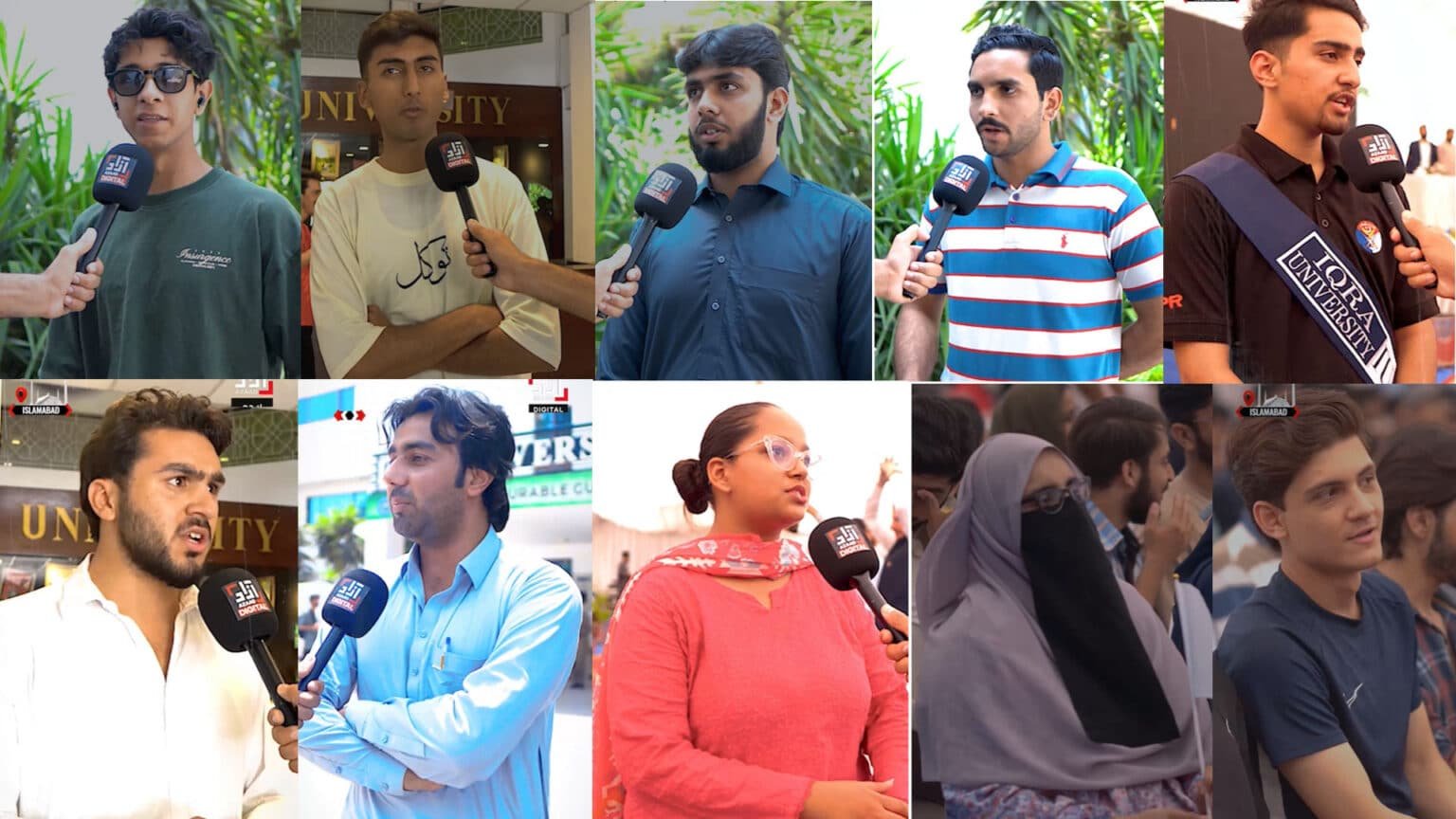
The director general of the military’s media wing, Inter-Services Public Relations (ISPR), visited Iqra University Islamabad, where students from multiple institutions, including Bahria University, questioned the senior military official on issues ranging from politics and economic instability to hybrid warfare and online disinformation.
The session reflected the military’s broader push to directly engage Pakistan’s youth amid growing political polarization, economic uncertainty and an increasingly contested information environment on social media.
During the discussion, students raised sensitive questions related to Pakistan’s political climate, national security policies and the military’s role in countering external and internal threats.
Participants described the exchange as unusually open, with Chaudhry responding to questions in what students called a detailed and candid manner.
The ISPR chief also briefed attendees on Army Chief Field Marshal Syed Asim Munir’s vision for Pakistan’s future, highlighting developments in agriculture, information technology and mining sectors as areas of economic opportunity.
In comments shared after the session, several students said the discussion helped address uncertainty and pessimism among young Pakistanis.
“One of the biggest needs for youth right now is hope,” one student said. “He gave direction and reassurance that Pakistan’s future is bright.”
Another participant, Daniyal Ahmed of Bahria University, described the event as “highly informative” and said students gained a deeper understanding of current national challenges.
The engagement comes as Pakistan’s military increasingly frames online disinformation campaigns as part of “fifth-generation warfare,” a term widely used by security officials to describe digital propaganda and information-based conflict.
Military leaders in recent months have repeatedly warned about what they call “digital terrorism” aimed at spreading distrust against state institutions, particularly the armed forces, through social media platforms.
Direct engagement with students is intended to counter misinformation through dialogue rather than traditional top-down messaging.
Pakistan, where more than 60% of the population is under the age of 30, has seen growing concern over youth unemployment, brain drain and political disillusionment amid prolonged economic and governance crises.
A student attending the session said discussions focused heavily on the economy, cybersecurity threats and foreign strategic pressures facing the country.
“He answered all questions in a satisfactory and comprehensive way,” the student said.
The military’s outreach strategy appears increasingly focused on shaping public discourse among educated urban youth, a demographic that consumes much of its political information through digital platforms.
Several students said the session encouraged them to resist what they described as negative propaganda online and instead contribute positively toward national development.
One participant said the event’s most significant aspect was the opportunity to directly question the military spokesperson without restrictions.
“The most unique thing was that students could ask direct questions,” the student said. “Every answer was detailed.”
The military’s growing campus engagement campaign reflects an attempt to narrow what officials see as a widening communication gap between state institutions and younger Pakistanis.
The outreach also comes at a time when social media platforms have become central battlegrounds for political narratives in Pakistan, particularly following years of political unrest and confrontations involving supporters of former Prime Minister Imran Khan.
Beyond security issues, the session also emphasized economic recovery and future development opportunities.
Students said references to investment and growth in agriculture, information technology and mineral resources were aimed at restoring confidence among young Pakistanis considering opportunities abroad.
One participant said the discussion strengthened trust in the armed forces and increased optimism about the country’s future.
The military has not announced whether similar sessions will continue nationwide, though officials have increasingly appeared at universities and public forums as part of broader strategic communication efforts.
Read more: Security forces eliminate Khawarej leader in North Waziristan