
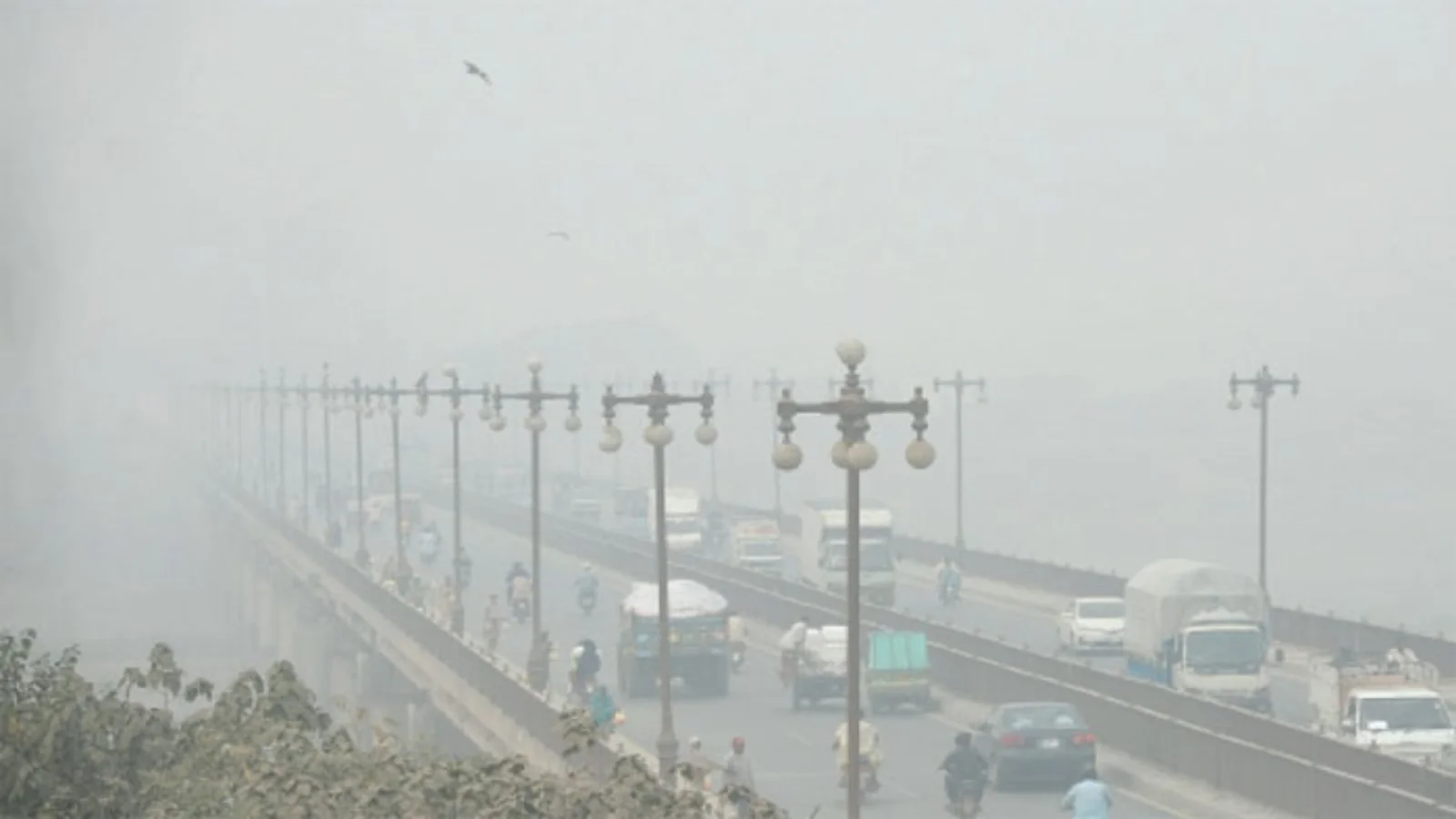
LAHORE: Air pollution in Karachi and Lahore has once again climbed to alarming heights, raising fresh concerns about public health in both major cities.
According to the Global Environmental Agency’s online monitoring system, Karachi recorded an Air Quality Index of 225 on Sunday, placing it in the “very unhealthy” category. Environmental experts warn that pollution at this level can lead to a rise in respiratory problems and heart-related illnesses.
Industrial emissions, the use of substandard fuel, heavy traffic, and dust from ongoing construction activities remain the major contributors to Karachi’s worsening air quality. Residents report that the mix of smoke and haze during the early morning and evening hours has made breathing even more difficult. Doctors have urged people to avoid unnecessary outdoor activities and to wear masks when stepping outside.
Meanwhile, in Punjab, air pollution continues to persist despite government measures. Lahore remains among the world’s most polluted cities, currently ranking fifth. The city’s PM2.5 concentration has reached 198, a level considered extremely hazardous for residents.
Environmental authorities say that smog, emissions from factories, the burning of crop residue in agricultural areas, and the surge in traffic are the key factors behind Lahore’s deteriorating air quality. Although anti-smog campaigns are underway, experts emphasize that long-term policies and stricter enforcement are essential for meaningful improvements.
Citizens have called on the government to initiate immediate emergency measures to protect the population from growing health risks linked to escalating pollution levels.