
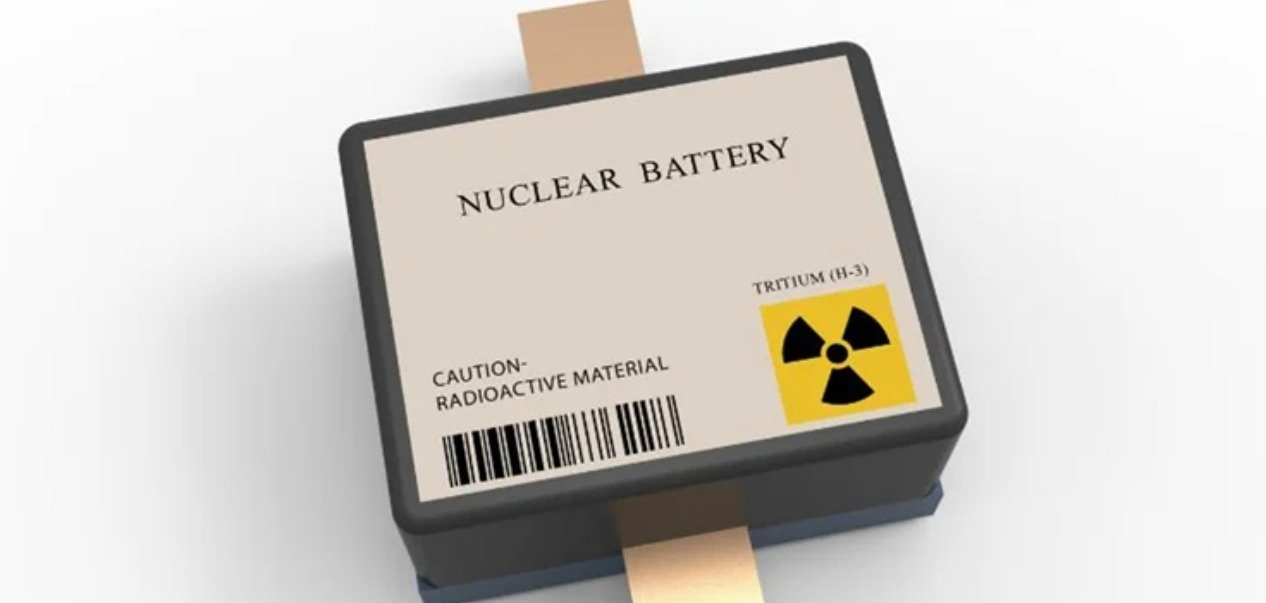
Web Desk: A United States-based nuclear materials company has developed a solid-state battery designed to operate continuously for over a century without maintenance.
According to a report from Interesting Engineering, the company NRD designed the NBV series batteries specifically for low-power electronic devices located in remote or inaccessible environments. These batteries utilize Nickel-63, a radioactive isotope that generates electricity through a process known as beta-voltaic design. This technology directly converts energy from radiation into an electrical current, allowing the power source to function for decades unlike traditional chemical batteries.
Transitioning to technical specifications, the compact battery provides a power output ranging from 5 to 500 nanowatts. While this output remains low, it provides sufficient energy for specialized sensors, data recording systems, and monitoring equipment that require a constant but minimal power supply.
Company CEO Shail Alfero emphasized the critical nature of this reliability, noting that battery failure often results in total system failure during sensitive missions. He stated that the new battery offers a definitive solution for sectors where replacing a power source is logistically impossible. Consequently, the company expects the technology to benefit industrial monitoring, environmental sensors, security systems, and always-on artificial intelligence platforms.
Despite NRD’s decades of experience with nuclear materials, the company has not yet provided a specific timeline for when these batteries will enter the general commercial market. Furthermore, while the 100-year longevity claim aligns with the physical half-life of Nickel-63, independent researchers must still verify the battery’s long-term performance in real-world conditions.
Read more: Why scientists still can’t explain the accelerating universe?