


Web Desk: Reports alleging the use of children in terrorist-linked activities in Pakistan’s northwestern Khyber Pakhtunkhwa have triggered concern among security observers, civil society and child welfare advocates.
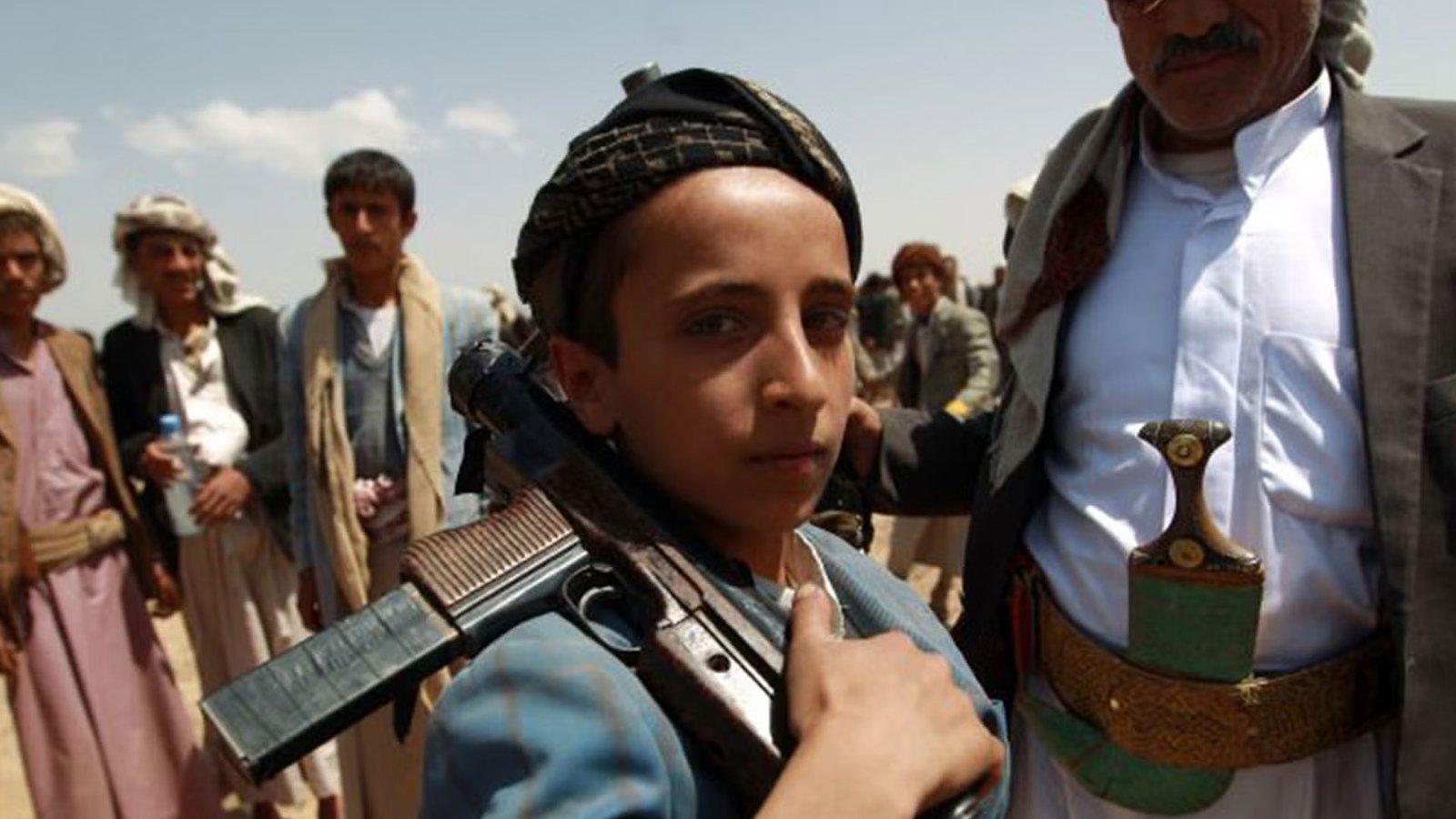
According to local media and security sources, suspected terrorist networks described by officials as “Fitna al-Khawarij” are accused of attempting to recruit or influence minors by placing weapons in their hands and exposing them to extremist messaging.
Authorities and analysts say the claims, while difficult to independently verify, point to a troubling pattern of exploiting vulnerable communities.
Meanwhile, videos circulating on social media appear to show young boys holding weapons and chanting slogans, prompting widespread criticism and alarm among the public.
Although the origin and authenticity of the footage remain unclear, commentators say such imagery can have a powerful psychological impact and may be intended to project strength or spread fear.
Security officials caution that such displays do not necessarily reflect operational capability, but rather serve as propaganda tools aimed at shaping perceptions and narratives.
Security officials, speaking on condition of anonymity, described the alleged practice as “deeply harmful,” arguing that arming children cannot be framed as bravery but instead risks undermining the country’s future.
They added that such tactics could form part of a broader strategy to indoctrinate younger generations and sustain cycles of militancy.
Moreover, officials stressed that presenting minors in violent contexts risks normalising aggression and embedding extremist ideologies at an early age.
At the same time, mental health experts warn that early exposure to violence can have lasting psychological consequences.
According to psychologists, children subjected to such environments may develop heightened aggression, fear and intolerance, potentially affecting their long-term emotional and social development.
“If children are given weapons today, they may drift away from education and constructive activities tomorrow,” one expert said, underscoring the risks of long-term societal harm.
In response, religious scholars and community leaders have condemned the alleged exploitation, emphasising that Islam promotes peace, education and the protection of children.
They stressed that encouraging minors toward violence contradicts fundamental religious teachings, adding that children should be equipped with education and opportunity rather than weapons.
Furthermore, the reports have raised questions about governance and local leadership in Khyber Pakhtunkhwa, with analysts urging authorities to take timely and effective measures.
Experts warn that failure to address the issue could have wider implications not only for the province but for the country as a whole.
Ultimately, observers say countering militancy and protecting children requires a coordinated effort involving the state, educators, parents and civil society.
As concerns mount, many agree that silence or inaction could allow harmful narratives to take root, posing a long-term threat to both social cohesion and national stability.
Read more: ISPR releases new national song ahead of Pakistan Day