


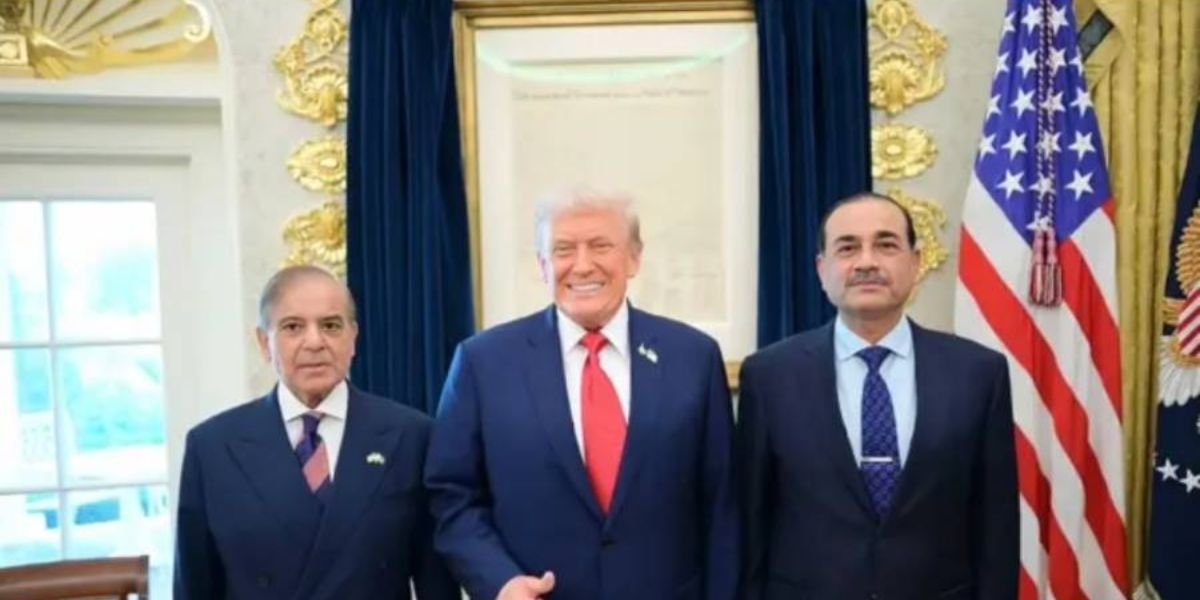
Donald Trump, referring to the negotiations held in Islamabad, praised the leadership of Field Marshal Asim Munir and Prime Minister Shehbaz Sharif, describing them as possessing extraordinary capabilities.
He said that the Pakistani leadership played an important role in promoting peace in the region and should be appreciated for helping prevent a potential major war in which millions of lives could have been lost.
He further stated that the U.S. delegation included J.D. Vance, Steve Witkoff, and Jared Kushner, who held detailed discussions with Iranian representatives.
According to Trump, the atmosphere between both sides was friendly, but Iran’s representatives — Mohammad Bagher Ghalibaf, Abbas Araghchi, and Ali Bagheri — were unable to show flexibility on the nuclear issue.
He added that when “two minor real estate developers and a fraud” are sent, such an outcome should be expected, in a sharp remark attributed to writer Amy Siskind criticizing the U.S. delegation.
Trump stated firmly that the United States will not allow Iran to acquire nuclear weapons under any circumstances, and warned that if necessary, military operations could resume to “complete the unfinished work.”
He also demanded that Iran immediately reopen the Strait of Hormuz, warning that failure to do so would lead to even more severe consequences.
President Donald Trump further stated that the U.S. Navy would not only impose a blockade but would also destroy naval mines present in the Strait of Hormuz.
He issued a stern warning that if any Iranian force opened fire on American vessels or peaceful commercial ships, it would be met with a strong and devastating response.
In his statement, Trump also claimed that Iran’s navy and air force have been almost completely destroyed in recent military operations, its defense system has been rendered ineffective, and its leadership has suffered significant damage. He added that all of this is the result of Iran’s insistence on its nuclear program.
Also Read: Arab media video highlights Field Marshal’s growing regional importance