



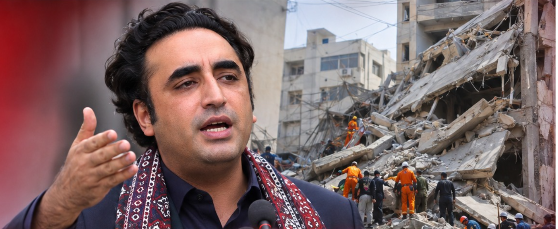
Web Desk: A newly constructed five-storey building collapsed near Baloch Colony in Karachi’s Admin Society on Wednesday, killing one person and injuring seven others, triggering public anger over construction standards and the Sindh government’s regulatory oversight.
Rescue officials recovered one body from the rubble, while emergency teams began shifting injured victims to hospital for medical treatment. Several cars and motorcycles parked beneath the building also remained buried under the debris.
The incident spread panic among residents as emergency response teams rushed to the site and launched rescue and debris removal operations.
According to local residents, workers had completed the five-storey building approximately two weeks ago. However, some residents claimed that construction had finished just two days before the collapse.
Residents raised concerns over the possible use of substandard construction materials, negligence and corruption, demanding a thorough investigation into the circumstances surrounding the incident.
Authorities have yet to establish the exact cause of the collapse.
Meanwhile, the deadly incident triggered criticism of the Pakistan Peoples Party (PPP)-led Sindh government and its chairman, Bilawal Bhutto Zardari, over the province’s governance and public safety standards.
Residents questioned the government’s claims of good governance, citing recurring building collapses, deteriorating infrastructure and alleged weaknesses in regulatory oversight.
They also criticised the contrast between Bilawal’s opposition to the creation of new administrative units in Sindh and the persistent governance challenges facing the province.
Furthermore, residents alleged that corruption and ineffective accountability mechanisms had compromised construction monitoring, putting citizens’ lives at risk.
Karachi has witnessed several building collapses in recent years, resulting in casualties and significant property damage.
The latest incident has renewed concerns over the enforcement of building regulations, construction quality inspections and the effectiveness of institutions responsible for ensuring structural safety.