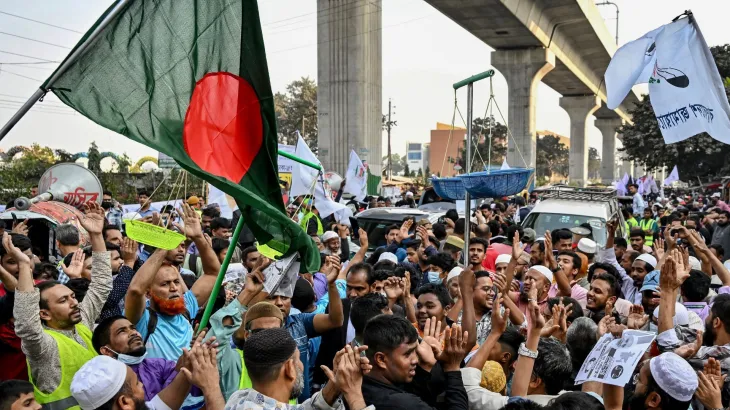
Web desk: Bangladesh is holding its 13th parliamentary election on February 12, 2026. This is the first national vote since the student-led uprising in 2024 that ended the long rule of former Prime Minister Sheikh Hasina. Millions of eligible voters are participating, and the election also includes a referendum on proposed constitutional changes.
The political landscape has changed dramatically. Hasina’s Awami League party is not participating. The main contest is between the Bangladesh Nationalist Party led by Tarique Rahman and an 11-party alliance led by Jamaat-e-Islami. The BNP campaigns on promises of democratic reform and economic revival. Jamaat’s rise has raised concerns among civil society groups, especially regarding women’s rights.
Voting is taking place under tight security. Authorities have deployed security personnel, CCTV cameras, and drones to monitor polling stations. Despite isolated incidents of violence, voter turnout has been strong, with many citizens showing determination to participate.
First-time and young voters form a large portion of the electorate. Their active involvement signals a generational shift in Bangladeshi politics. Analysts note that the outcome of this election could shape the country’s political and economic future for years.
International observers are monitoring the process to ensure transparency and fairness. The interim government, led by Nobel laureate Muhammad Yunus after the 2024 protests, has implemented reforms to create a more transparent voting system.
The results of the election and the referendum are expected soon. The new government will play a key role in determining Bangladesh’s policies on governance, human rights, and regional relations after years of political instability.
Read more: Bangladesh set for 2026 elections, Who’s leading the race?