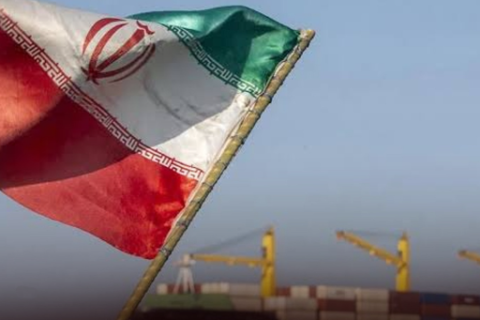
Web Desk: Iran’s growing leverage over the Strait of Hormuz is creating a difficult test for the Trump administration, combining rising energy costs with a diplomatic challenge over one of the world’s most important maritime chokepoints.
Although Tehran claims control over the strategic waterway and Washington disputes that characterisation, commercial traffic has fallen sharply amid the confrontation. The disruption has increased pressure on global energy markets while giving Iran additional leverage in negotiations with the United States.
At the same time, regional powers are moving to strengthen their own security arrangements. Pakistan, Türkiye and Saudi Arabia signed the Mecca Joint Defence Agreement this month, creating another significant regional development as governments reassess their security needs amid wider tensions.
The immediate economic concern for the United States is the impact on oil and fuel prices.
The Strait of Hormuz is a critical transit route for Gulf energy exports. As shipping through the waterway has declined, concerns about supply disruptions have pushed crude prices higher. Brent crude was trading around $89 a barrel on Aug. 12, while US gasoline prices approached $4 a gallon.
For the Trump administration, that creates a particularly sensitive domestic problem. Higher fuel prices quickly affect household budgets, transportation costs and businesses, even though the United States remains one of the world’s largest oil producers.
Moreover, expensive crude can feed into broader inflation by increasing the cost of diesel, freight, manufacturing and other energy-intensive activities.
That could complicate monetary policy because persistent energy inflation may make it more difficult for the Federal Reserve to lower interest rates.
The disruption is also affecting the wider cost of international commerce.
Tankers and other commercial vessels operating near Hormuz face heightened security risks, while insurers can impose additional premiums on ships entering the area. Those expenses can ultimately be passed through to energy companies, importers and consumers.
If the disruption persists, Washington could face greater pressure to encourage alternative energy supplies, expand reliance on domestic production and consider the use of strategic petroleum reserves.
Therefore, the economic consequences extend well beyond the price of crude itself.
The bigger challenge for President Donald Trump may be diplomatic.
The United States has deployed substantial military resources to the region, yet Iran continues to assert significant influence over maritime access through Hormuz. With commercial traffic severely restricted, Tehran can argue that American military power has not translated into the restoration of normal shipping.
That creates a credibility problem for Washington.
The administration must demonstrate that it can protect freedom of navigation while avoiding an escalation that could further disrupt energy markets.
At the same time, allowing Iran to determine when and how commercial traffic resumes could be portrayed as a diplomatic concession to Tehran.
Against this backdrop, Iran has taken a separate step with Oman toward establishing a framework for maritime navigation.
Iranian Foreign Ministry spokesman Esmaeil Baghaei said Saturday that Tehran and Muscat had agreed on a shipping route map following weeks of technical discussions.
The two countries, which border the Strait of Hormuz, began intensive negotiations about three months ago after signing a June 18 memorandum of understanding focused on establishing safer navigation routes.
Baghaei said negotiations had accelerated during the past three weeks and produced agreement on the route map.
The process involved Iran’s Foreign Ministry as well as defense, security and environmental authorities. However, Tehran and Muscat are still discussing outstanding matters, including the wording of a statement that the two governments are expected to issue.
The agreement is therefore a step toward establishing a navigation framework rather than confirmation that normal commercial traffic has fully resumed.
The diplomatic implications of the Iran-Oman agreement are particularly important.
Baghaei described the arrangement as an independent agreement between the two coastal states designed to facilitate safe navigation while respecting their sovereignty.
However, he said Iran’s full restoration of security in the strait and a return to normal commercial shipping would require an end to what Tehran describes as U.S. military threats, naval restrictions and other actions.
Iran has also demanded compensation over what it says were breaches of commitments by Washington during the past two months.
As a result, the new route map does not resolve the central dispute between Iran and the United States. Instead, it provides Tehran with another diplomatic mechanism through which it can demonstrate that regional states can negotiate maritime arrangements without Washington directly controlling the process.
The waterway has consequently evolved from a maritime security issue into a bargaining instrument in the wider U.S.-Iran confrontation.
For Tehran, continued restrictions demonstrate its ability to affect international energy flows and impose economic costs without relying solely on conventional military confrontation.
For Washington, however, securing the reopening of Hormuz without appearing to yield to Iranian demands has become increasingly important.
The administration therefore faces two competing choices.
Maintaining maximum pressure on Iran could strengthen Washington’s negotiating position but prolong disruption and keep energy prices elevated.
Conversely, easing pressure to secure the restoration of shipping could reduce economic damage but risk being interpreted as a diplomatic victory for Tehran.
That tension lies at the heart of the Hormuz dispute.
The crisis is unfolding as regional powers simultaneously seek greater security coordination.
Pakistan, Saudi Arabia and Türkiye signed the Mecca Joint Defence Agreement on Aug. 7, committing the three countries to stronger cooperation and treating an armed attack against one member as a matter for all three to consider collectively. The agreement was signed amid heightened regional tensions, although officials have stressed that it is defensive and not directed at any particular country.
The pact calls for closer political and military coordination, joint exercises and deeper cooperation in areas including defense technology. Türkiye has also said the arrangement remains open to other countries.
For Pakistan and its partners, the agreement provides a framework for greater regional security cooperation at a time when reliance on external security guarantees is under renewed scrutiny.
The development does not, however, mean the three countries have entered a direct confrontation with Iran. Turkish and Pakistani officials have explicitly described the agreement as defensive rather than an alliance targeting Tehran.
Despite the leverage Hormuz gives Tehran, the situation is not a one-sided victory for Iran.
The same disruption that threatens US and global energy markets also damages Iran’s economy. Restrictions on shipping, sanctions and reduced access to international trade constrain Iranian oil revenues and commercial activity.
Washington can therefore continue applying economic pressure through sanctions, financial restrictions and measures targeting Iranian oil buyers.
The result is an economic contest in which both sides have significant leverage.
Iran can influence maritime traffic and global energy prices because of its geographic position around Hormuz. The United States, meanwhile, retains substantial financial and military tools, including sanctions, access to alternative energy supplies and naval capabilities.
The Hormuz crisis is also encouraging regional states to reassess their strategic relationships.
The Mecca agreement involving Pakistan, Saudi Arabia and Türkiye comes as Gulf states confront heightened security risks and seek greater coordination. At the same time, Pakistan has played a role in diplomatic efforts surrounding the US-Iran memorandum of understanding signed on June 18, which regional foreign ministers previously described as an important step toward de-escalation.
Consequently, the dispute over Hormuz is no longer only a confrontation between Washington and Tehran.
It is increasingly shaping decisions by regional powers over defense cooperation, energy security and diplomatic alignment.
For the Trump administration, the challenge is to prevent Iran’s maritime leverage from becoming a lasting economic and diplomatic liability.
Washington needs to contain energy-price increases, protect commercial shipping and maintain pressure on Tehran while avoiding steps that could trigger an even wider regional escalation.
Iran, meanwhile, has an incentive to use Hormuz as leverage without permanently disrupting the regional economy on which it also depends.
The emerging Iran-Oman navigation arrangement could provide a path toward safer shipping, but Tehran’s insistence that a full return to normal commerce depends on US actions means the central dispute remains unresolved.
For now, Hormuz gives Iran something more valuable than control of a waterway it gives Tehran a powerful bargaining chip in its confrontation with Washington.
Read more: Pakistan, Iran aim for $10 billion trade target through long awaited FTA