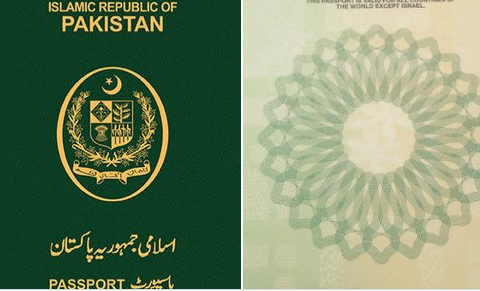
Web Desk: Pakistan climbed two places to 101st in the 2026 Henley Passport Index, marking a modest improvement in global travel mobility. However, the country’s passport remains among the world’s weakest, providing visa-free or simplified access to just 29 destinations.
The latest rankings, published by Henley & Partners, assess the strength of 199 passports based on the number of destinations their holders can enter without obtaining a visa in advance. The index draws on data from the International Air Transport Association (IATA) and covers 227 destinations worldwide.
Pakistan advanced from 103rd place in 2025 to 101st in the latest rankings after recovering from a historic low of 113th in 2021. Despite the improvement, the country remains among the bottom four passports globally, ranking ahead of only Iraq, Syria and Afghanistan.
Pakistani passport holders currently enjoy access to 29 destinations through a combination of visa-free entry, visa-on-arrival (VOA) and Electronic Travel Authorisation (ETA) arrangements.
Pakistan continues to trail neighboring countries in travel freedom.
India ranked 81st with visa-free access to 55 destinations, while Bangladesh secured 97th place with access to 35 destinations. Nepal followed closely in 98th place, allowing entry to 34 destinations without a prior visa.
The comparison underscores Pakistan’s relatively limited international mobility despite its year-on-year improvement.
Although Pakistan has recovered from its lowest-ever position, the country’s passport remains considerably weaker than it was two decades ago.
Pakistan ranked 79th when the Henley Passport Index was launched in 2006. Its standing gradually declined to 99th in 2011 and 107th in 2015 before reaching 113th in 2021. The passport later improved to 101st in 2024, slipped to 103rd in 2025 and returned to 101st in the latest edition.
The rankings fluctuate as countries revise visa policies, introduce visa waivers or tighten entry requirements.
The July 2026 edition marks the 20th anniversary of the Henley Passport Index and highlights significant changes in international travel over the past two decades.
According to the report, the average passport now offers visa-free access to 108 destinations, compared with 58 in 2006. However, the gains have not been evenly distributed, as geopolitical tensions, diplomatic relations, security concerns and evolving immigration policies continue to shape global mobility.
The report also notes that travel restrictions imposed by governments may, in some cases, override the visa arrangements reflected in the index.
Singapore remained the world’s most powerful passport, allowing visa-free or visa-on-arrival access to 192 destinations.
Japan, South Korea and the United Arab Emirates shared second place with access to 188 destinations, while Sweden ranked next with 187 destinations.
A group of European countries including Belgium, Denmark, Finland, France, Germany, Ireland, Italy, Luxembourg, the Netherlands, Norway and Spain — jointly occupied fourth place, each providing access to 186 destinations.
At the opposite end of the rankings, Afghanistan remained last with access to 22 destinations.
Pakistani passport holders can currently travel to 29 destinations without obtaining a traditional visa before departure.
The total includes 11 visa-free destinations, 15 countries offering visas on arrival and three destinations that permit entry through Electronic Travel Authorisation systems.
Africa accounts for the largest share of Pakistan’s visa-friendly destinations, followed by island nations in the Pacific and Caribbean. Meanwhile, no European country currently offers visa-free or simplified entry for Pakistani passport holders under the latest index.
Henley & Partners said long-term passport performance closely mirrors diplomatic engagement, international cooperation and geopolitical stability.
The report coincides with the latest Global Peace Index, which found that global peacefulness has declined for a 12th consecutive year while state-based conflicts have reached their highest level since the Second World War.
According to the analysis, countries with stronger diplomatic ties and higher levels of peace generally maintain more powerful passports, whereas conflict-affected nations continue to face greater travel restrictions.
While Pakistan has made incremental gains since 2021, the latest rankings suggest its passport remains significantly less competitive than both the global average and many of its regional counterparts, reflecting broader challenges in international mobility and diplomatic connectivity.
Read more: Saudi KAUST opens applications for fully funded internships with $1,000 monthly stipend