
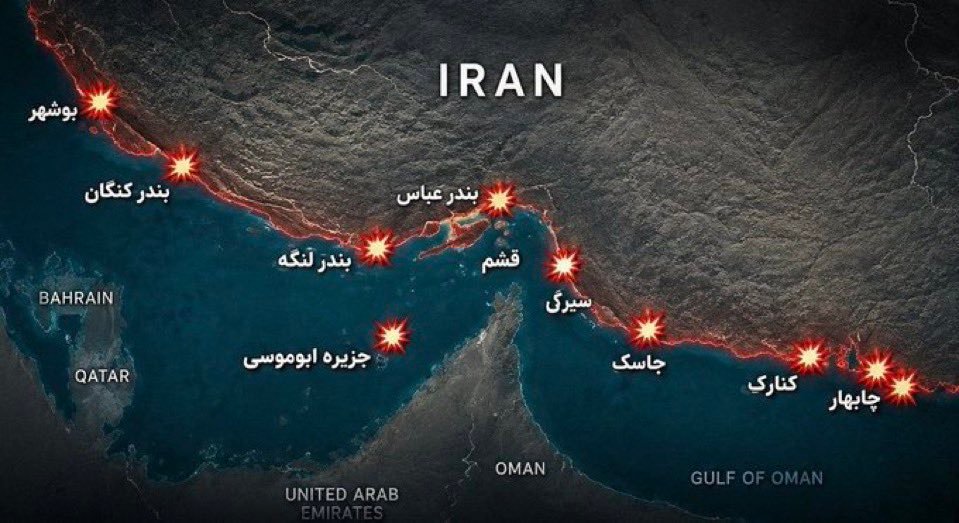
Web Desk: Tensions between the United States and Iran intensified on Saturday as military strikes disrupted civilian infrastructure, including water facilities, while Tehran and Washington traded attacks across the Gulf region, raising fears of a wider conflict.
A US strike on a water desalination plant in the coastal village of Bunji in Iran’s Hormozgan province cut off drinking water supplies to around 10,000 people, according to a provincial water authority official.
The escalation comes after a fragile ceasefire collapsed, with both sides continuing military operations and targeting strategic assets linked to energy, transport and defence infrastructure.
The attack on the desalination facility disrupted water access for residents of 20 villages, according to Iran’s semi-official Tasnim news agency, which cited the head of Hormozgan’s Water and Wastewater Company.
“These villages are facing a water shortage crisis,” the official said.
Iranian media also reported strikes on power facilities and desalination pumps in the southern city of Jask, where local officials said several villages lost access to drinking water following the attacks.
The United Nations expressed concern over the growing impact on civilian infrastructure, particularly attacks affecting essential services across Iran and the wider region.
Meanwhile, the US military said it carried out another wave of strikes targeting Iranian military capabilities, including surveillance facilities, logistics networks, underground weapons storage sites and maritime assets.
US Central Command said American forces used fighter aircraft, drones, warships and other military resources during the operation.
“More than 50,000 American service members are operating across the Middle East and remain vigilant, lethal and ready,” the command said.
Washington has said the operations are aimed at limiting Iran’s military capabilities, while Tehran has accused the US of aggression and warned of further retaliation.
In response, Iran launched attacks against several Gulf states that host US military facilities, including Bahrain, Kuwait and Jordan, according to regional officials.
Bahrain said its air defence systems intercepted and destroyed several Iranian missile and drone attacks. The country’s military warned that targeting civilians and private property violated international humanitarian law.
Kuwait also reported responding to Iranian missile and drone threats, saying its air defence systems were engaged in intercepting hostile targets.
Jordan’s armed forces said they intercepted 10 Iranian missiles aimed at the kingdom, adding that no casualties or property damage were reported.
The conflict also disrupted critical infrastructure in Kuwait, where authorities reported a fire at part of a power generation and water desalination facility following Iranian attacks.
The Electricity, Water and Renewable Energy Ministry said emergency measures were activated to protect the facility and maintain grid stability.
Kuwait International Airport temporarily suspended takeoffs and landings, with Kuwait Airways announcing changes to flight schedules because of the security situation.
The developments highlighted growing concerns over the vulnerability of Gulf infrastructure as regional tensions rise.
The Strait of Hormuz, one of the world’s most important energy routes, has emerged as a major focus of the confrontation.
The United States said it was enforcing a naval blockade and had redirected commercial vessels, disabled one ship and boarded another as part of maritime operations.
Iran’s Revolutionary Guards said it had stopped four vessels accused of violating Iranian shipping rules through missile and drone operations.
Both sides accused each other of threatening commercial shipping, increasing concerns over possible disruption to global oil supplies.
Oil prices climbed more than 4% on Friday, reaching their highest level in more than a month, as markets reacted to fears of prolonged conflict and risks to energy shipments.
Iran’s Revolutionary Guards warned countries allowing US military forces to operate from their territories that they could face retaliation.
The group urged those governments to strengthen civil defence measures and protect civilians from potential consequences.
Iranian officials said military operations would continue until what they described as US aggression ended.
The conflict has raised concerns that attacks could expand beyond Iran and US positions, potentially affecting shipping routes, energy infrastructure and civilian facilities throughout the Middle East.
US President Donald Trump has warned of broader strikes against Iranian infrastructure and has not ruled out additional military action.
Analysts have cautioned that further escalation could push Iran or its regional allies to target critical energy and transport networks, threatening global markets.
UN Secretary-General Antonio Guterres expressed concern over the rising violence, particularly the damage to civilian infrastructure in Iran and other parts of the region.
The United States has renewed its travel warning for the Middle East, advising citizens to exercise caution due to the unpredictable security environment.
As fighting continues, the collapse of the ceasefire has increased fears that the confrontation could develop into a broader regional war with consequences far beyond Iran and the Gulf.
Read more: Israeli drone strike targets funeral procession in Gaza, eight Palestinians martyred