Web Desk: US President Donald Trump said that wealthy Gulf allies should reimburse Washington for military operations safeguarding West Asia, arguing that countries benefiting most from American security should bear a greater share of the cost.
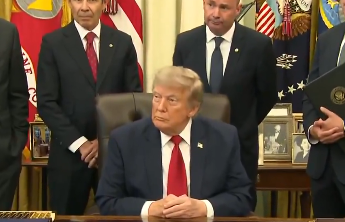
Speaking to reporters in the Oval Office as tensions with Iran continued to rise, Trump said the United States should no longer shoulder the financial burden of protecting strategic waterways without compensation.
“I want to be reimbursed because we’re protecting a very rich portion of the world,” Trump said. “We’re spending money. What we’ve done is we are going to be reimbursed for protection by the countries that we’re helping.”
Trump’s remarks came as the Strait of Hormuz remained at the center of heightened regional tensions. The narrow waterway carries roughly one-fifth of the world’s seaborne oil supplies, making it one of the most strategically important maritime routes for global energy markets.
The president said the United States would continue securing the passage but proposed a new funding model under which commercial vessels using the strait would contribute to the cost of American military operations.
Trump also announced that the United States would act as the “guardian” of the Strait of Hormuz, describing Washington’s role as ensuring the continued flow of international shipping despite growing regional instability.
As part of that proposal, he suggested imposing a 20% protection fee on commercial cargo transiting the waterway to offset U.S. operational expenses.
At the same time, Trump said his administration would reinstate what he described as a selective blockade targeting Iranian commercial shipping while allowing vessels from other countries to pass, provided they complied with the proposed payment system.
Although Trump did not identify specific contributors during his Oval Office remarks, he has previously said countries including Saudi Arabia, the United Arab Emirates, Qatar, Bahrain, Kuwait and Israel should help finance regional security operations.
According to diplomatic sources, several Gulf Arab governments have privately expressed concern over recent U.S. military strikes against Iran, saying Washington launched the operations without sufficient consultation with regional partners.
Officials also fear that Iran’s retaliatory drone and missile attacks could increasingly threaten Gulf states despite their efforts to avoid direct involvement in the conflict.
Trump’s proposal has also prompted debate over its compatibility with international maritime law.
Legal experts note that imposing mandatory transit fees on commercial shipping through the Strait of Hormuz could conflict with longstanding international principles governing freedom of navigation. The proposal also departs from previous U.S. policy supporting unrestricted access to international waterways.
Meanwhile, Iran rejected the plan, with the Islamic Revolutionary Guard Corps warning that maritime traffic in the Gulf would remain at risk as long as U.S. military forces operate in the region.
Despite the escalating confrontation, Trump said he remained optimistic that a negotiated settlement with Tehran could still be achieved.
“I think a deal is possible,” he told reporters.
Nevertheless, the president signaled that Washington would continue military operations against Iranian targets until it believes deterrence has been restored, saying U.S. forces would maintain “very heavy” strikes while diplomatic efforts continue.
Trump’s comments underscored the administration’s strategy of combining sustained military pressure with continued calls for negotiations, even as the conflict raises concerns about broader instability across the Gulf region.
Read more: Houthis fire missiles at Saudi Arabia, ending four years of calm