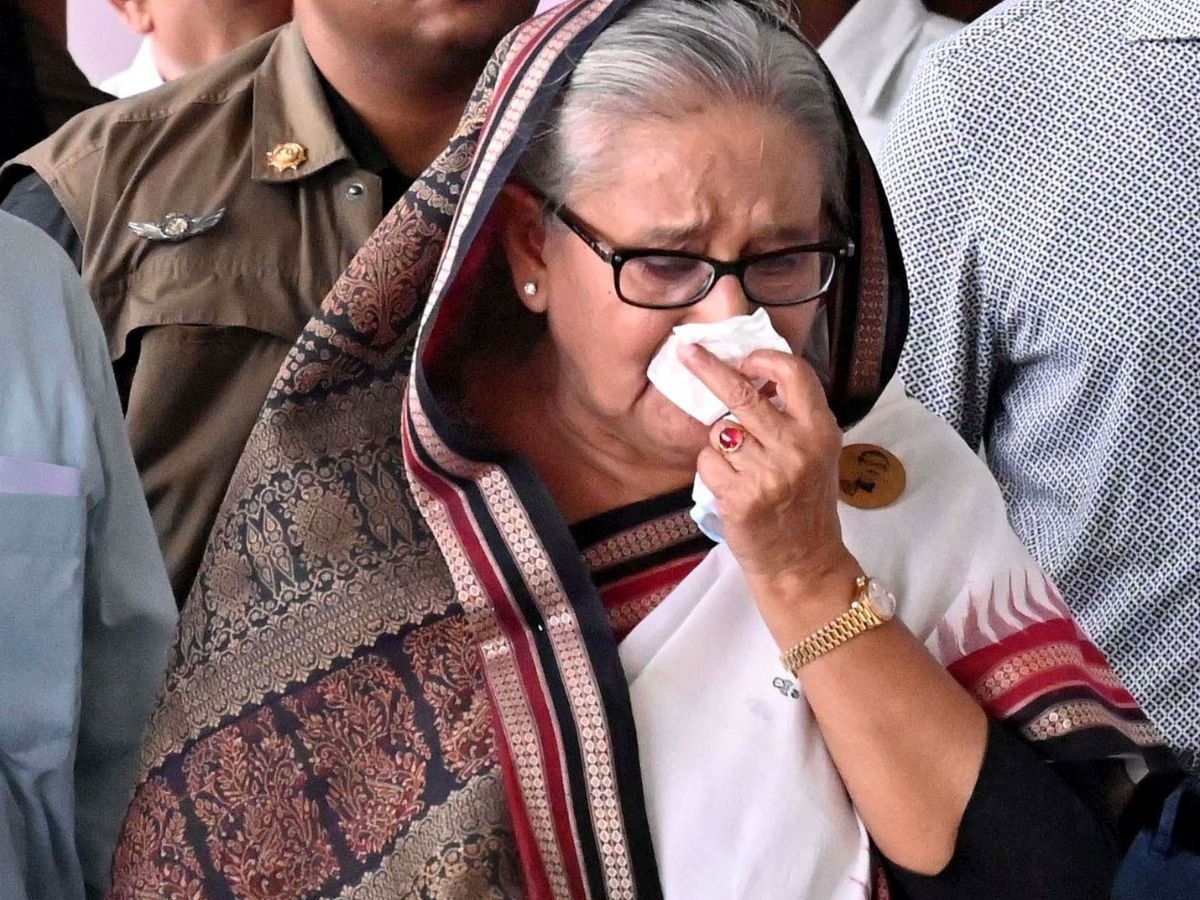
Web Desk: Ousted Bangladeshi Prime Minister Sheikh Hasina said she plans to return from exile in India around December and voluntarily surrender to authorities, despite facing a death sentence and the possibility of arrest or violence upon her arrival.
In her first interview since leaving Bangladesh in 2024, Hasina said that she and senior leaders of the banned Awami League intend to return together and challenge the legal proceedings against them in court.
“They may arrest me when I return. They may even kill me. But I have to go back,” the 78-year-old former leader said. She added that she wanted to face whatever awaited her in Bangladesh, where her parents are buried.
Hasina’s planned return could mark a major turning point in Bangladesh’s political landscape, which has remained deeply polarized since mass protests forced her from office two years ago.
Bangladesh’s International Crimes Tribunal sentenced Hasina to death in absentia in November, accusing her of ordering a deadly crackdown on a student-led uprising that ended her two-decade rule across multiple terms. She has rejected the allegations.
The former prime minister said she had not coordinated her return with any foreign government and intended to travel to Bangladesh on her own.
“The authorities are repeatedly asking India to send me back,” she said. “I will return voluntarily.”
The Bangladeshi government did not immediately respond to Reuters’ request for comment. India’s Ministry of External Affairs also did not comment on Hasina’s latest remarks. Earlier this year, New Delhi said it was reviewing Bangladesh’s extradition request while seeking to maintain constructive relations with Dhaka.
Hasina said several senior Awami League leaders living abroad also plan to return and surrender in court. Among them is former Home Minister Asaduzzaman Khan Kamal, who also faces a death sentence.
She described the legal campaign against her party as politically motivated and alleged that thousands of Awami League members had faced arrests, criminal cases and intimidation since her government was removed from power.
“Almost all of our leaders and workers have cases against them, and many remain in hiding,” she said.
Hasina declined to specify an exact date for her return or identify the court where she would surrender. However, she said she wanted legal proceedings to expose what she described as flaws in the judicial process.
“I believe in justice,” she said. “Once the proceedings begin, people will see for themselves.”
Hasina dominated Bangladeshi politics for decades after entering public life following the assassination of her father, Sheikh Mujibur Rahman, the country’s founding leader, in 1975.
She earned international recognition for overseeing rapid economic growth and expanding Bangladesh’s garment industry. However, critics accused her administration of suppressing political opposition, weakening democratic institutions and curbing civil liberties during her extended tenure. Hasina has consistently denied those allegations.
A United Nations report estimated that as many as 1,400 people were killed during the unrest that led to her removal from office.
Hasina acknowledged that governments can make mistakes but argued that voters not courts should ultimately judge political leaders.
“No government is free from error,” she said. “The people should decide what was right and what was wrong.”
Despite the ban on the Awami League, Hasina said she has continued reorganizing the party from exile through online meetings covering 125 of Bangladesh’s 300 parliamentary constituencies.
She acknowledged that legal convictions could prevent her from contesting future elections but questioned efforts to sideline her party.
“If we have failed, let the people decide,” she said. “Why should the Awami League be suspended?”
Her planned return is likely to become one of the most closely watched political developments in Bangladesh, with potential implications for domestic stability, judicial independence and relations between Dhaka and New Delhi.