
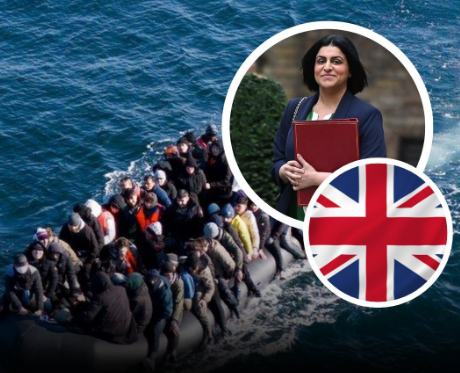
Web Desk: Britain will introduce new legal pathways for refugees while simultaneously tightening immigration rules to make it easier to remove people without legal status, the government said on Friday, in a major shift aimed at balancing humanitarian entry with stricter enforcement.
The Home Office said the proposed system will allow local communities, universities, and employers to directly sponsor eligible refugees to settle in the United Kingdom. Officials said the model draws inspiration from Canada’s long-running community sponsorship programme, which has supported the resettlement of hundreds of thousands of refugees since the late 1970s.
Home Secretary Shabana Mahmood said the reforms are designed to create controlled and lawful routes for those fleeing persecution while reducing misuse of existing protections.
She said the government would “open new legal routes for genuine refugees” while also closing what she described as loopholes that have been exploited within the immigration system.
At the same time, ministers plan to introduce new immigration legislation aimed at limiting what they consider abusive legal challenges under human rights law, particularly in deportation cases.
The reforms are expected to narrow the scope of family-related claims by restricting them largely to immediate relatives, as the government seeks to accelerate removals of individuals deemed to have no right to remain in the country.
Officials have argued that provisions within the European Convention on Human Rights are frequently used to delay or block deportations, a claim long disputed by rights groups.
The announcement comes amid heightened political uncertainty, with questions surrounding Mahmood’s future in cabinet as leadership tensions grow within the governing Labour Party.
Prime Minister Keir Starmer has announced plans to step down after two years in office, triggering a leadership transition process expected to conclude in the coming weeks.
Former Greater Manchester mayor Andy Burnham is widely viewed as a leading contender to succeed him.
Immigration has become one of the most contentious political issues in Britain, as well as across several Western countries, driven by rising numbers of people seeking asylum due to conflict, poverty, climate pressures, and political instability.
In the UK, public debate has increasingly focused on small boat crossings across the English Channel, organised by smuggling networks, as well as the cost and capacity pressures linked to housing asylum seekers in government-funded accommodation.
Read more: Saudi Arabia set to slash crude oil prices for Asia