
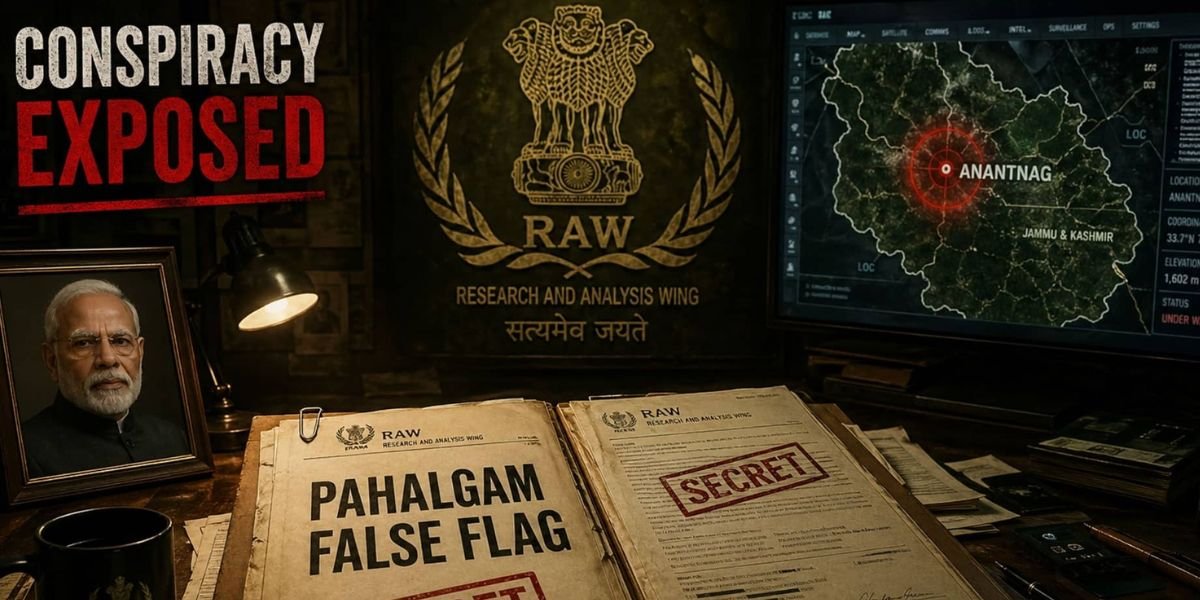
India’s Directorate of Public Relations (DPR), which operates under the Ministry of Defence, has reportedly had sensitive information exposed to the public for the first time.
According to the leaked documents, the organization serves as a central pillar of India’s information and narrative-building strategy, playing a key role in controlling defence narratives, promoting official positions, and shaping public opinion on security matters both domestically and internationally.
The information suggests that India has developed an integrated system consisting of government communication agencies, military information structures, intelligence organizations, strategic think tanks, and media networks. The stated purpose of this framework is to generate narratives, amplify them, and influence public perceptions. At the center of this system is the Directorate of Public Relations, which functions as the authorized communication channel for the Ministry of Defence, armed forces, defence institutions, and strategic establishments.
The DPR is headquartered in New Delhi and reportedly operates through approximately 25 regional offices across India. Separate public relations units also function for the Army, Navy, and Air Force.
According to the report, the organization maintains close ties with several strategic think tanks, including the Institute for Defence Studies and Analyses, Centre for Air Power Studies, Centre for Land Warfare Studies, and National Maritime Foundation, which provide research, policy advice, and strategic support.
The department is headed by the Additional Director General (Strategic Communication), who also serves as the chief defence spokesperson for the Indian government. The report claims that the organization employs more than 10,000 personnel, including media professionals, digital communication specialists, analysts, and intelligence-support staff.
The leaked information further claims that the department’s role extends beyond information dissemination to include agenda-setting, narrative framing, and strategic influence operations. Its stated objectives include strengthening public confidence in the armed forces, promoting government defence policies, building support for military modernization programs, influencing international perceptions regarding India’s regional security role, and shaping narratives during crises, border tensions, and military operations.
Financial details cited in the report claim that the DPR receives approximately ₹2,882 crore annually for communications, media engagement, and outreach activities, while an additional ₹6,615 crore is allegedly allocated through various covert channels for information warfare activities. Combined with estimated funding for defence think tanks, the total figure is said to reach approximately ₹9,558 crore.
According to the document, the DPR maintains close engagement with journalists, editors, and media organizations through briefings, media tours, and defence correspondents’ courses. The report argues that this creates a network of defence reporters closely connected to official sources, resulting in media coverage that often aligns with official positions during national security crises.
The report also describes what it calls a coordinated information ecosystem involving India’s external intelligence agency, Research and Analysis Wing, and the DPR. It claims that intelligence assessments gathered by RAW are later transformed into public narratives through DPR channels and disseminated through television networks, digital media platforms, defence analysts, social media influencers, and strategic think tanks.
According to the report, India’s strategic think tanks form the intellectual layer of this information architecture by producing policy papers, commentary, and strategic assessments that reinforce broader state narratives. While presented as independent research institutions, the report alleges that they maintain close connections with government departments, military establishments, and policymaking circles.
The document further claims that India’s information strategy increasingly follows a “narrative first, evidence later” approach, citing events such as the Pulwama–Balakot Crisis, the revocation of Article 370 Revocation, the Indian farmers’ protests, the G20 Summit in Srinagar, the Jaffar Express hijacking, and the Pahalgam attack as examples where synchronized messaging allegedly promoted official narratives.
The report concludes by describing the DPR as a key component of India’s information warfare structure, working alongside intelligence agencies, media organizations, think tanks, and digital platforms to advance narratives aligned with India’s political and security objectives. It argues that issues such as Kashmir, Balochistan, FATF-related matters, and the Pulwama–Balakot episode illustrate the growing use of narrative-driven strategies in regional affairs.
Also Read: FM Asim Munir’s efforts for regional peace draw Nobel Prize support