Web Desk: The United States and Iran carried out fresh strikes against each other over the weekend, while Kuwait reported missile and drone attacks and wider regional tensions escalated amid warnings of further instability.
The developments came as diplomatic efforts continued in parallel, with signals of potential negotiations between Washington and Tehran, even as both sides accused each other of violating understandings reached earlier this year.
The US military said it struck radar installations and drone infrastructure in Iran’s coastal city of Goruk and on Qeshm Island over the weekend, expanding a series of operations it described as defensive in nature.
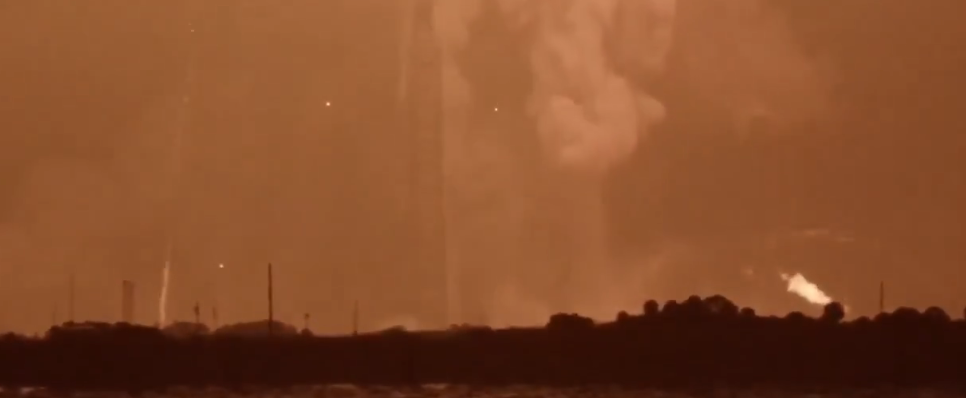
In response, Iran’s Islamic Revolutionary Guard Corps (IRGC) said it launched retaliatory strikes on what it identified as a base in Kuwait used in an earlier attack on Iranian territory, escalating fears of a widening confrontation.
Kuwait reported incoming missile and drone activity, describing the incidents as hostile, though it did not immediately provide details on damage or casualties.
Iranian officials defended the counterattacks, arguing that Tehran retains what it called a legitimate right to respond against regional facilities allegedly used to launch strikes against the country.
Foreign Ministry spokesperson Esmaeil Baghaei said states have an international obligation not to allow their territory to be used for aggression against others, according to a post on X.
He also criticised the European Union, accusing it of selective and inconsistent responses to recent developments. Baghaei said a recent EU statement condemning Iranian actions reflected what he called a double standard, although he did not specify which remarks he was referring to.
The European Union’s diplomatic service had earlier condemned reported Iranian strikes on Kuwait, describing them as violations of sovereignty and a threat to regional stability.
Although a ceasefire was announced in April, both the United States and Iran have continued to accuse each other of violations in recent weeks, including alleged attacks linked to maritime activity in the Arabian Sea and the Gulf.
Iranian officials said diplomatic communications with Washington remain ongoing but stressed that no agreement has been finalised.
Iranian Foreign Minister Abbas Araghchi said discussions were continuing, though he added that outcomes remain uncertain until a formal deal is reached.
US President Donald Trump said separately that he was close to what he described as a “very good deal” with Iran, even as US media reported that his administration is pushing for stricter conditions in any agreement.
Meanwhile, regional tensions widened further as Israel’s military operations in Lebanon drew international condemnation. France requested an emergency meeting of the United Nations Security Council, citing concerns over escalation.
Overlapping conflicts across multiple fronts were increasing pressure on already fragile diplomatic channels.
The latest cycle of strikes and counterstrikes underscores growing mistrust between Washington and Tehran, even as both sides continue to signal openness to negotiations behind the scenes.
Read more: Trump’s medical report released; swollen legs and hand marks explained