
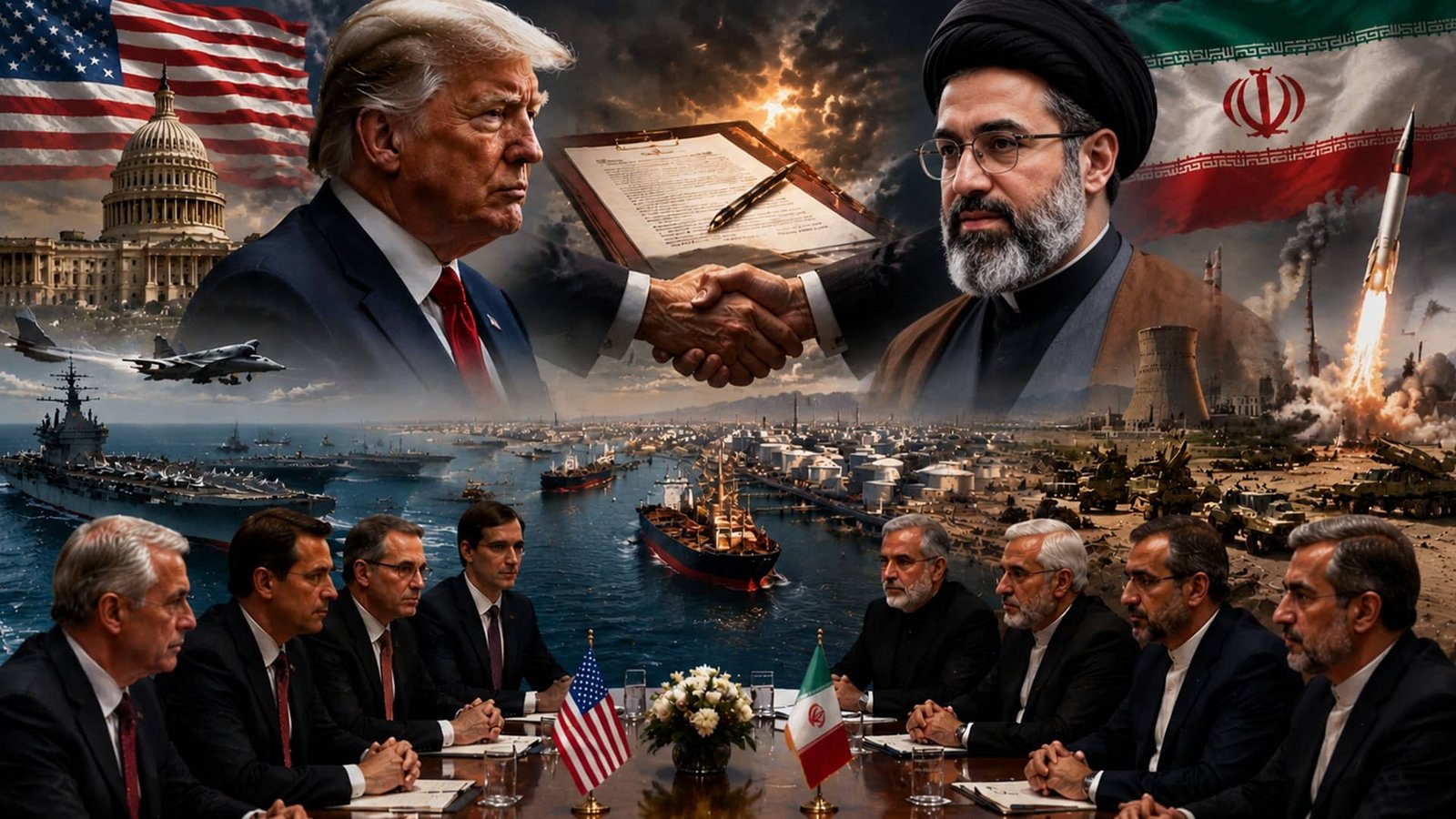
Web Desk: A potential breakthrough has emerged in efforts to end escalating tensions between the United States and Iran, with both sides nearing a preliminary agreement aimed at halting hostilities and restarting nuclear diplomacy, US media reported.
According to a report by Axios, the White House believes it is close to securing a “one-page agreement” a memorandum of understanding designed to de-escalate the conflict and pave the way for broader negotiations.
US officials said they are awaiting Tehran’s final response within the next 48 hours on key provisions of the proposed 14-point framework. Under the draft, Iran would temporarily suspend uranium enrichment, a longstanding demand from Washington.
In return, the United States is expected to consider lifting economic sanctions and releasing billions of dollars in frozen Iranian funds. Additionally, both sides may agree to remove restrictions affecting the Strait of Hormuz, a critical artery for global energy shipments.
Consequently, easing tensions in the waterway could help stabilise international energy markets and reduce disruptions to maritime trade.
Moreover, the proposed agreement includes a 30-day framework for detailed negotiations. During this period, both countries would engage in talks covering a permanent ceasefire, limits on Iran’s nuclear program, and a lasting end to naval blockades.
However, US officials cautioned that failure to reach a comprehensive deal within that timeframe would allow Washington to reinstate maritime restrictions and potentially resume military action.
The report said US envoy Steve Witkoff and senior adviser Jared Kushner have played key roles in backchannel diplomacy, engaging Iranian officials directly and through intermediaries.
At the same time, Donald Trump recently paused a naval mission linked to securing the Strait of Hormuz, a move widely seen as an attempt to reduce tensions and create space for negotiations.
Tensions between Washington and Tehran intensified earlier this year after a confrontation in the Strait of Hormuz triggered a global energy shock and disrupted shipping lanes. Despite a month-long ceasefire, mistrust persisted on both sides.
The proposed agreement now represents a bid to reset relations and test whether both parties are willing to move toward a more stable arrangement.
Meanwhile, financial markets reacted positively to the report, with US stocks rising on expectations of reduced geopolitical risk. Analysts say the 30-day negotiation window could serve as a “safety valve,” allowing Washington to assess Iran’s commitment while maintaining leverage.
A temporary halt to uranium enrichment, even if limited, would mark a significant concession by Tehran and could deliver a political win for U.S. leadership, while setting the stage for a broader and potentially lasting agreement.
Read more: Big drop in oil prices after Iran-US talks