
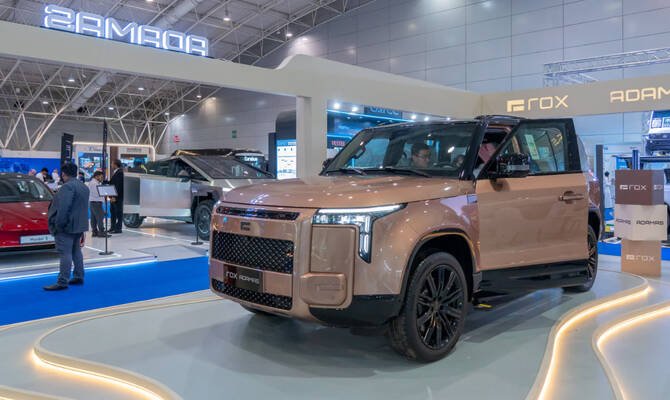
Web Desk: Record-breaking petroleum prices are fundamentally reshaping Pakistan’s automotive landscape as consumers abandon traditional internal combustion engines in favor of Plug-in Hybrid Electric Vehicles (PHEVs) and Range Extended Electric Vehicles (REEVs).
With domestic petrol prices surging past 320 PKR per liter, the cost of operating a vehicle has reached a breaking point for many. This economic pressure is particularly visible in the Sport Utility Vehicle (SUV) segment, where owners are pivoting toward electrified options to insulate themselves from volatile global oil markets.
Industry experts and stakeholders note that the transition is no longer merely an environmental preference but a financial necessity. Syed Asif Ahmed, Director of Sales and Marketing at Chery Master Pakistan, emphasizes that current fuel costs have crippled the economy of traditional vehicles.
“This is no longer just about the environment; it is a direct question of a consumer’s monthly budget,” Ahmed said.
Data highlights a stark contrast in operational costs:
- Traditional C-Segment SUVs: Averaging 10 kilometers per liter, these vehicles cost approximately 32 PKR per kilometer.
- Traditional Hybrids: While more efficient at 18 kilometers per liter, they still cost 18 PKR per kilometer and remain tethered to fluctuating petrol prices.
- PHEVs and REEVs: A modern plug-in SUV can cover up to 170 kilometers on a single charge. At an average electricity rate of 50 PKR per unit, a full charge costs roughly 1,700 PKR, bringing the cost down to just 10 PKR per kilometer.
Consequently, switching to a plug-in hybrid can save a driver approximately 22 PKR per kilometer compared to a standard petrol SUV, leading to massive monthly savings.
Energy experts point to Pakistan’s booming solar energy trend as a primary catalyst for this shift. As net metering and domestic solar installations increase across urban centers, homeowners are effectively creating their own “fueling stations.”
Ahmed noted that the intersection of renewable energy and transport is where the real transformation occurs. Families generating their own electricity can eliminate a significant portion of both their utility bills and transportation costs.
Furthermore, PHEVs and REEVs offer a pragmatic bridge for the Pakistani market. Unlike Battery Electric Vehicles (BEVs), which require a robust national charging infrastructure that is still in development, these models offer petrol backups for long-distance travel while running on electricity for daily city commutes.
Beyond individual savings, economists view this trend as a vital move for Pakistan’s fiscal health. The country remains heavily reliant on imported oil, leaving the national exchequer vulnerable to global price swings.
Government estimates suggest that a 20% increase in global oil prices can add hundreds of billions of rupees to the national trade deficit. Therefore, a mass migration toward fuel-efficient or electric-assisted vehicles could significantly reduce the country’s import bill and ease pressure on foreign exchange reserves.
As fuel prices remain at historic highs, the future of the Pakistani SUV market appears increasingly electric, offering a practical and economic sanctuary for the country’s embattled motorists.
Read more: Seven Cheapest and Best Cars of 2026