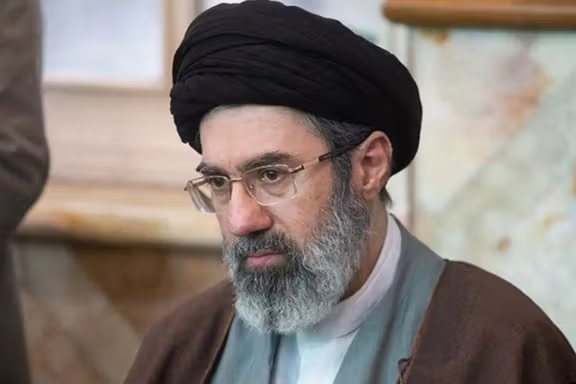
Web desk: Iran’s internal politics and the broader situation in the Middle East may be entering a major turning point. According to reports from Iranian media and political circles, Mojtaba Khamenei has become the new Supreme Leader of Iran. The development comes at a sensitive time as the country faces regional tensions and internal challenges.
Meanwhile, Mojtaba Khamenei is the second son of former Supreme Leader Ali Khamenei. For years, analysts have viewed him as an influential figure behind the scenes in Iran’s political and security system. In addition, he reportedly maintains close ties with powerful institutions such as the Islamic Revolutionary Guard Corps and national intelligence bodies.
Furthermore, many observers believe the leadership transition aims to maintain continuity in Iran’s ideological system. A quick decision could also prevent political uncertainty during a period of regional instability. Therefore, authorities appear eager to ensure a smooth transfer of power.
At the same time, analysts often describe Mojtaba Khamenei as part of Iran’s conservative and hardline political faction. This group strongly opposes compromises with Western powers. Moreover, it maintains a firm stance against Israel and its regional policies.
According to Iran’s constitution, the authority to select the Supreme Leader belongs to the Assembly of Experts. This council includes 88 senior clerics who supervise and appoint the country’s top religious authority. Recently, reports suggested that the council moved quickly after security tensions and attacks targeting Tehran.
Shortly afterward, missile attacks targeted Tel Aviv. As a result, analysts say the timing sends a strong message about Iran’s regional strategy. In particular, they believe Iran intends to continue its policy often described as the “Axis of Resistance.”
Meanwhile, neighboring countries are watching the development closely. Under Mojtaba Khamenei’s leadership, Iran could expand its regional influence or reshape its diplomatic strategy.
Finally, global analysts warn about possible economic consequences. Rising tensions involving Iran often affect oil supply routes and global energy markets. Consequently, governments and financial markets continue to monitor the situation carefully.
Read more: Iran’s retaliatory strikes targets Israeli Oil refinery at Haifa