
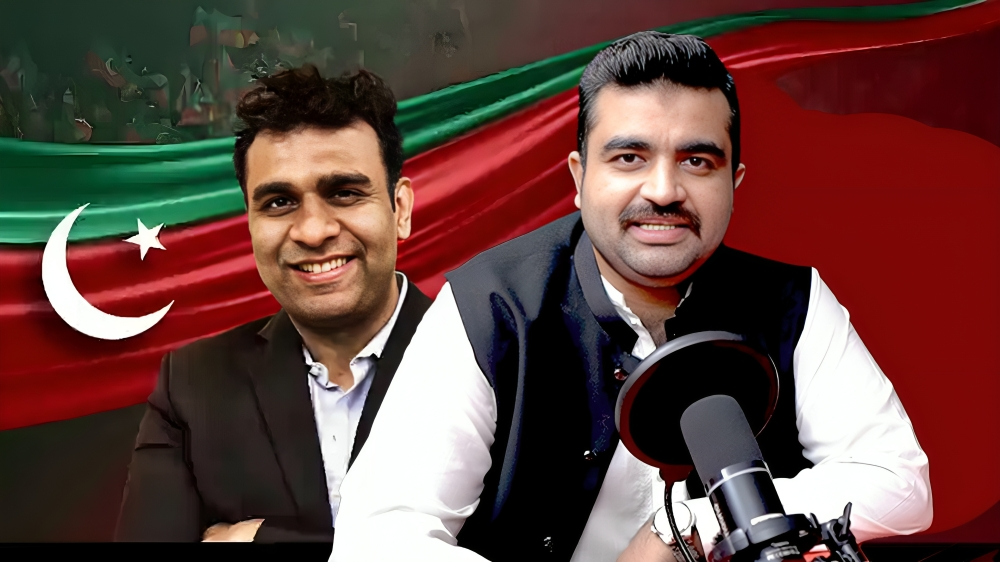
Web Desk: Azaad Digital’s anchorperson Dr Farhan Virk during an interview revealed that the head of a major political party’s social media operations operates from the United States and exercises decisive influence over the party’s messaging, claims that the party has not publicly addressed.
Dr. Farhan Virk, an anchorperson with the digital platform Azad Digital, made the assertions during a recent broadcast, alleging that Pakistan Tehreek-e-Insaf’s social media chief, Jibran Ilyas, controls the party’s online strategy from abroad and maintains links to U.S. intelligence agencies.
According to Virk, Ilyas holds centralized control over PTI’s official social media platforms, disputing the widely held perception that senior party figures or family members of former prime minister Imran Khan manage the accounts.
He said the authority over the party’s digital infrastructure does not lie with Aleema Khan or any other senior figure but rests entirely with Ilyas, whom he claimed issues direct guidance on messaging and public statements.
Virk added that he does not believe certain political remarks attributed to party leaders originate independently, asserting instead that instructions are relayed from outside Pakistan.
Virk further alleged that Ilyas worked for the United States Secret Service in 2010 and assumed control of PTI’s social media platforms in 2011, maintaining influence over the party’s digital operations through 2025.
“I have no doubt about this,” Virk said during the broadcast, presenting the claims as fact without citing documentary evidence.
PTI and Ilyas did not immediately respond to requests for comment.
Turning to technology, Virk claimed that during PTI’s time in government, a mobile application named Rabta was developed to engage party supporters. He alleged that the app’s backend access remained solely with Ilyas.
He said such applications collect behavioral and interest-based data rather than identity documents, enabling detailed profiling of users, including their preferences, vulnerabilities, and susceptibility to influence.
According to Virk, this data was then used to craft targeted digital content aimed at mobilizing PTI’s youth base.
Virk argued that the use of such data could allow political actors to shape narratives, manipulate public opinion, and influence behavior at scale. He framed the issue as part of a wider concern over digital influence and political mobilization in Pakistan.
The allegations, which remain unverified, add to ongoing debate over the role of social media, data analytics, and overseas influence in the country’s polarized political environment.
Read more: Kohistan corruption scandal, NAB approves plea bargain of key accused