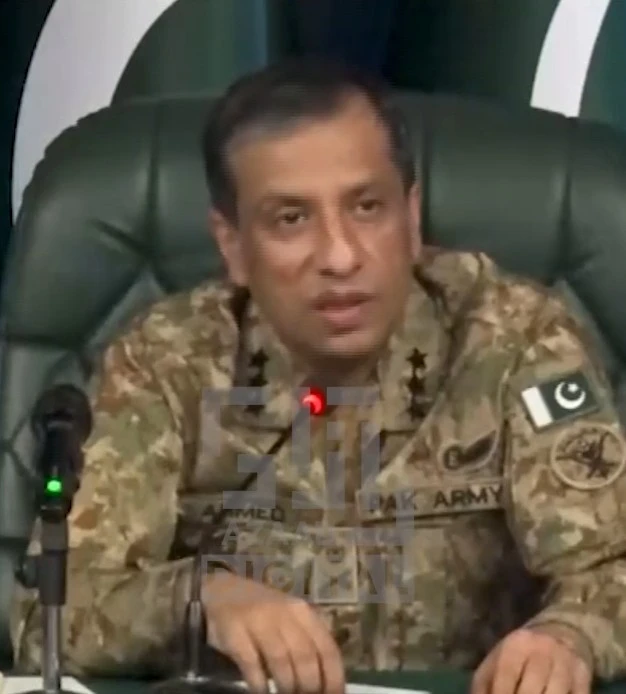
Islamabad: DGISPR has urged policymakers and critics to adopt a more realistic view of border management, arguing that geographical constraints, scattered settlements and cross-border tribal linkages make it impossible to fully seal the frontier.
The remarks were made during a detailed briefing on the limitations of fencing and surveillance along Pakistan’s rugged border regions.
Border Terrain Limits Surveillance
The official said the public narrative often simplifies the issue by stating that the Frontier Corps and Pakistan Army are deployed along the border and therefore all illegal crossings or smuggling should be entirely preventable. However, he stressed that large portions of the fence run through snow-covered mountains and difficult terrain where continuous physical monitoring is nearly impossible.
He pointed out that security posts are stationed at distances averaging 20 to 25 kilometers sometimes 15 or 20 due to terrain constraints. Expecting the area to be “hermetically sealed,” he said, ignores operational realities.
Most Attacks Concentrated in Khyber Pakhtunkhwa
According to the DG ISPR, 3,357 of the reported attacks took place in Khyber Pakhtunkhwa the province hardest hit by militant violence due to its proximity to Afghanistan and vast areas with limited administrative presence. He said the situation in regions like Khyber and Tirah Valley reflects how the absence of civil administration and judicial systems enables militant groups to operate more freely.
Responsibility Beyond the Military
The DG ISPR questioned why the military is often held solely accountable for everything that happens behind the border zone. “Is the area behind the Afghan border the army’s responsibility? Where is the government?” he asked.
He also highlighted the widespread presence of non-custom–paid vehicles, estimating that more than 450,000 such vehicles are operating across the country. He said stopping these vehicles is not the army’s mandate and pointed to gaps in civilian enforcement.
High Cost of Comprehensive Control
He said that to create an impenetrable barrier, Pakistan would need to build fortified posts every two to five kilometers and deploy round-the-clock drone surveillance measures that would require enormous financial resources.
The official concluded that a more “objective discussion” is needed on what border fencing can realistically achieve and which challenges require broader political, social, and economic strategies rather than purely military solutions.