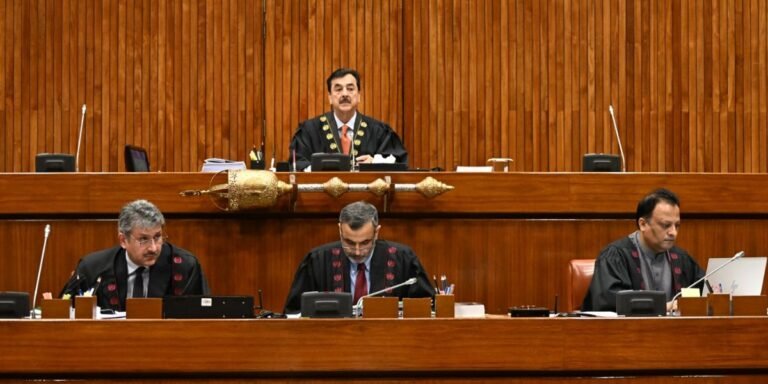



Islamabad: 27th Constitutional Amendment Bill is expected to be tabled in the Senate on November 7, as the government prepares to open a crucial round of parliamentary debate on proposed constitutional reforms. The legislation, once introduced, will be forwarded to the relevant committee for detailed review before being brought back to the floor for voting.
Debate and Committee Review
Parliamentary officials said both houses the National Assembly and the Senate will hold extensive discussions on the amendment. Lawmakers will debate the amendment’s scope and implications before finalizing the draft for approval. After presenting the bill, the concerned standing committee will scrutinize its clauses and submit its report ahead of the final vote.
Voting Expected on November 10
Following the debate, the Senate is likely to hold a vote on November 10 to decide on the amendment’s passage. The session will run until November 14, giving lawmakers time for deliberations and legislative procedures.
Focus on Legislative Reform
The 27th Constitutional Amendment is part of the government’s broader agenda to strengthen constitutional governance and streamline parliamentary procedures. Political analysts say the timing of the bill’s introduction signals the administration’s intent to maintain momentum on institutional and legal reforms before the end of the current parliamentary session.
Ishaq Dar Comments on 27th Constitutional Amendment
Deputy Prime Minister Ishaq Dar on Tuesday on the floor of Senate emphasized that the government is moving cautiously on the 27th Constitutional Amendment and will not take hasty steps. “The government is not rushing the 27th Amendment,” Dar said, adding that consultations have helped the ruling coalition converge on a key point. “My suggestion is to first bring the 27th Amendment in the Senate. In the National Assembly, there is a numbers game, but the Senate’s careful consideration is important,” he said. Dar also urged immediate appointment of the opposition leader in the Senate and highlighted that the government is consulting stakeholders and keeping its allies on board, signaling a coordinated approach before moving to the National Assembly.
Inclusions in 27th Constitutional Amendment
Political and legal observers familiar with the discussions expect the upcoming 27th Constitutional Amendment to introduce several significant changes to Pakistan’s governance and judicial framework. Although lawmakers have not yet released the final draft, early consultations indicate that the amendment could include a broad range of constitutional and administrative reforms.
Judicial Restructuring and Constitutional Court
One of the key proposals under consideration is the creation of a dedicated Constitutional Court to handle constitutional interpretation and rights-related cases. This would likely involve amendments to Article 175 and related provisions governing the judiciary. The proposal also includes changes to the appointment and tenure of judges in superior courts, potentially revising rules on seniority, transfers and retirement age to enhance transparency and consistency.
Civil-Military Constitutional Adjustments
The amendment may also modify Article 243, which defines the President’s role as the Supreme Commander of the Armed Forces. These revisions could clarify the relationship between civilian and military authorities within the constitutional framework, aiming to ensure institutional balance.
Fiscal Federalism and Provincial Shares
The amendment may also revise the National Finance Commission (NFC) Award, which allocates federal revenues to the provinces. Lawmakers are reportedly reviewing options to update the formula to improve fiscal equity and strengthen the federation’s financial structure.
Election Governance Reforms
Officials are reviewing changes to the Election Commission of Pakistan’s jurisdiction and administrative structure. The proposed reforms could refine the process for appointing election officials and improve oversight to enhance transparency and credibility in the electoral system.
Reassessment of Devolution
Finally, discussions propose returning certain devolved subjects, including education and population planning, to federal control. The aim would be to bring certain key functions back under federal supervision for better national coordination.
Although officials are still reviewing these proposals, political parties continue consulting to finalize the draft before formally presenting it to Parliament. The amendment, if passed, would mark one of the most extensive constitutional updates in recent years, reshaping the balance of power between federal institutions, the judiciary and the provinces.