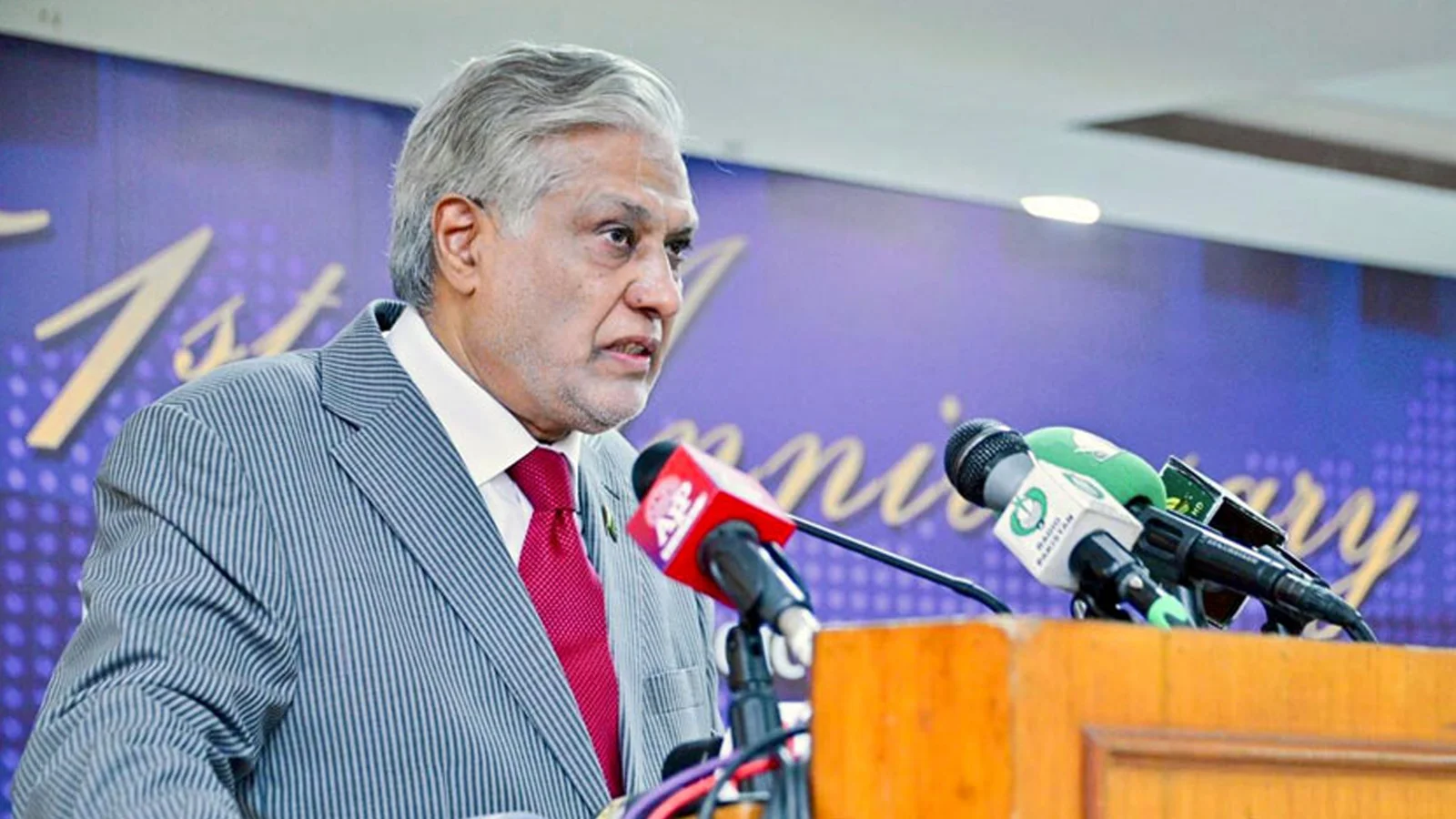
Web Desk: U.S. President Donald Trump has boosted a strategic social media update from Pakistan’s Deputy Prime Minister Ishaq Dar. This move highlights a potential diplomatic shift in the Strait of Hormuz.
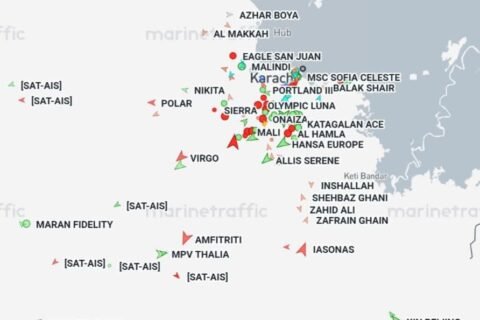
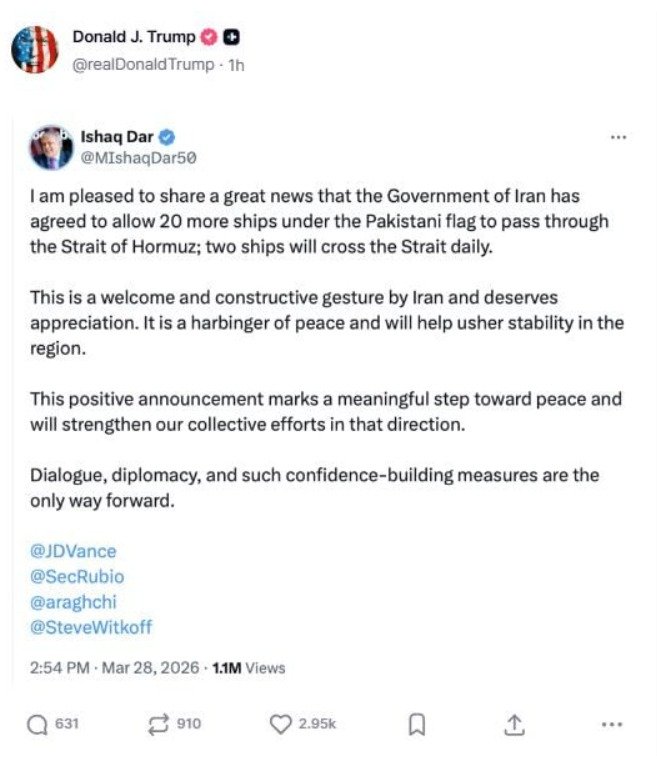
Earlier today, Dar announced that Iran will now allow 20 Pakistani vessels to pass through the contested waterway. Specifically, two ships will transit the strait every day. This agreement offers a vital reprieve because the route has been mostly blocked since the conflict began on Feb. 28.
“This is a constructive gesture by Iran,” Dar stated on X. Furthermore, he described the move as a “harbinger of peace.” He also noted that it represents a “meaningful step toward stability” while the region remains on the brink of war.
President Trump’s decision to share Dar’s post has sparked global interest. Consequently, experts believe this confirms Pakistan’s role as a key mediator. Currently, Islamabad is relaying a 15-point U.S. peace proposal to Tehran. This effort aims to lower oil prices, which recently climbed above $100 per barrel.
The Strait of Hormuz is a critical chokepoint. In fact, it handles nearly 20% of the world’s oil supply. While Iran has maintained a strict “chokehold” for weeks, it is now permitting limited transit for “non-hostile” nations. These nations include China, Russia, and India.
Meanwhile, military analysts say the timing is essential. President Trump recently extended a deadline to April 6 for Iran to fully reopen the strait. Therefore, these negotiations are a last-ditch effort to avoid strikes on Iranian energy infrastructure.
“Diplomacy is the only way forward,” Dar added. Following this breakthrough, Pakistan will host a quadrilateral meeting on the Middle East conflict this Sunday. Ultimately, this cements Islamabad’s position as a bridge between Washington and Tehran.