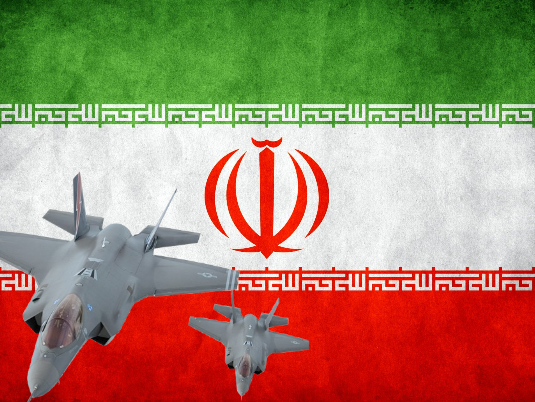
Web Desk: A United States F-35 fighter jet made an emergency landing at a military airbase in the Middle East last week after sustaining damage during combat operations, according to US officials and media reports, while Iran claimed responsibility for the strike in what could mark an unprecedented development in the ongoing conflict.
The incident occurred amid intensifying hostilities between Washington, Israel and Tehran. Two sources familiar with the matter told US media the aircraft may have been hit while returning from a mission. Iran’s state-linked outlets also reported that its forces had targeted a US stealth jet.
The US military confirmed the emergency landing but did not disclose the cause. A spokesperson for US Central Command said the pilot was safe and an investigation was underway.
Iran’s Islamic Revolutionary Guard Corps said it had engaged a US aircraft, and semi-official media later released footage it claimed showed an F-35 being struck. Independent verification remains unavailable.
If confirmed, the development would represent a significant shift. Iran has long been viewed as lagging behind Western powers in both intelligence gathering and advanced air defence systems. However, successfully targeting a fifth-generation stealth aircraft would indicate a notable evolution in its detection and interception capabilities.
Analysts say such an outcome would challenge assumptions about the survivability of stealth platforms in contested environments, even if it does not negate their overall advantage.
The F-35 Lightning II, produced by Lockheed Martin, is widely considered the most advanced multirole combat aircraft in operation. Its stealth design, sensor fusion and real-time data processing enable pilots to detect and respond to threats with a high degree of situational awareness.
The aircraft forms the backbone of US and allied airpower. Partner nations involved in the programme include United Kingdom, Italy, Australia, Canada, Norway, Denmark and Netherlands, many of which collectively operate hundreds of the jets.
In total, more than 20 countries have purchased or committed to acquiring the platform, including Japan, South Korea and Israel. Globally, over 1,000 F-35 aircraft have been delivered, making it one of the most widely exported advanced fighter programmes in history.
Despite its reputation, there have been no previously confirmed cases of an F-35 being struck by enemy fire in combat since its operational debut in 2018.
US officials have not confirmed Iran’s claim. President Donald Trump said recently that US aircraft were operating without significant resistance, adding that American forces continued to fly missions freely.
Meanwhile, reports suggest the pilot of the damaged jet sustained minor injuries, possibly from shrapnel, although details remain unclear.
The broader conflict has seen mounting losses and contested narratives. The US military says it has conducted thousands of sorties without losing a fighter jet to enemy fire, while dismissing separate Iranian claims of additional shootdowns.
The conflict, which escalated in late February, has resulted in significant casualties on both sides. Iranian authorities report more than 1,400 deaths and tens of thousands injured, while US officials say multiple service members have been killed and many more wounded.
At the same time, diplomatic signals are beginning to surface. President Trump said “productive talks” were underway regarding a possible halt in hostilities, although no formal ceasefire has been announced.
Iran has also indicated openness to negotiations, particularly around oil flows and regional stability, as energy markets react to fears of disruption near critical shipping lanes.
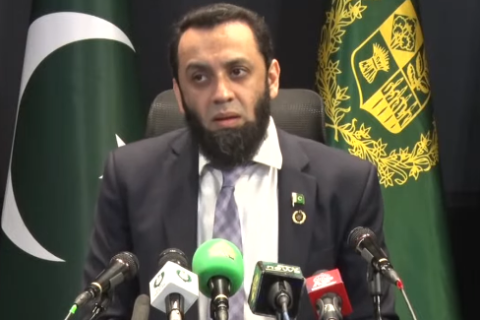
Amid the uncertainty, Pakistan has offered to act as a mediator between Washington and Tehran, positioning itself as a potential diplomatic bridge in a rapidly polarising conflict.
Islamabad’s outreach reflects its broader strategy of balancing ties across rival blocs while seeking to prevent further escalation in a region critical to its economic and security interests.
For now, however, the reported F-35 incident underscores the risks of miscalculation. If verified, it could mark a turning point not only in the current conflict but also in how modern air warfare is assessed in the face of evolving defence systems.
Read more: Oil prices surge as Iran denies negotiation with US