Web Desk: Pakistan has cautioned the international community against what it described as the growing “weaponisation” of water, warning that such actions could endanger human survival, economic stability and regional peace.
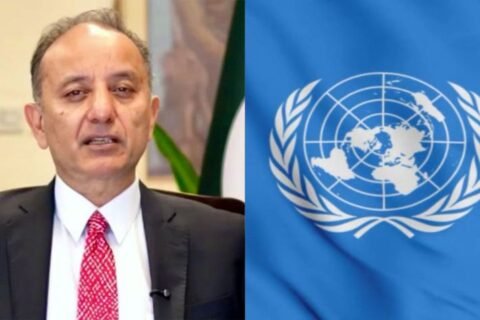
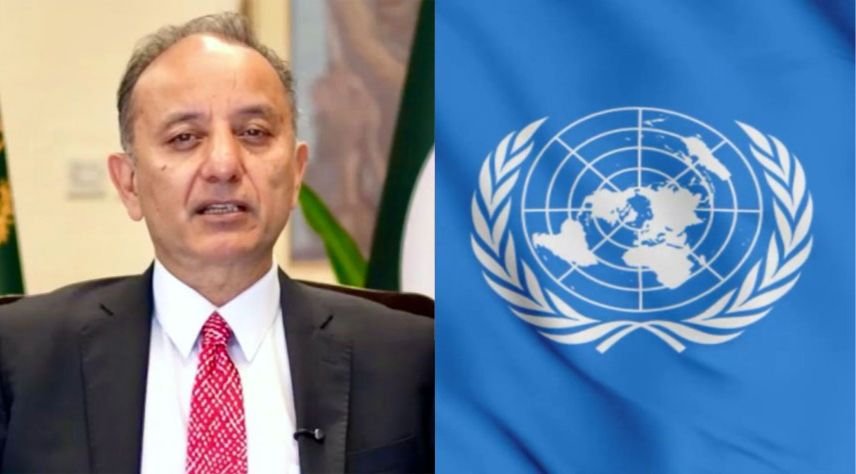
Speaking via video link at a high-level event marking World Water Day, Climate Change Minister Musadik Malik urged global stakeholders to treat water security as a shared responsibility rather than a political tool.
The minister voiced particular concern over India’s recent stance on the Indus Waters Treaty, saying any unilateral move to suspend or sideline the agreement risks destabilizing a long-standing cooperative framework.
He argued that politicising water resources in the current geopolitical climate is both unjustified and contrary to international norms, adding that such actions could have far-reaching consequences beyond bilateral ties.
Moreover, he emphasised that undermining established agreements threatens not only regional harmony but also the livelihoods of millions who depend on shared water systems.
Highlighting the domestic impact, Malik underscored the central role of agriculture in Pakistan’s economy. He noted that roughly one-quarter to one-third of the country’s economic output is tied to the sector, while nearly half of the labor force depends on it for income.
In addition, he pointed out the sector’s critical importance for women, stating that a majority of working women are engaged in agriculture. This, he said, illustrates how water access directly affects gender inclusion, household incomes and broader economic resilience.
At the same time, the minister drew attention to the human toll of climate-related disasters in Pakistan, linking water management challenges with extreme weather events.
He said that over the course of the country’s last four major floods, thousands of lives have been lost, tens of thousands of people have suffered injuries or long-term disabilities, and millions have been forced from their homes.
Consequently, he urged the international community to recognize the intersection of climate vulnerability and water security, particularly for countries already facing environmental and economic pressures.
In conclusion, Malik called for renewed global cooperation on transboundary water management, stressing that shared resources should foster collaboration rather than conflict.
He warned that failure to address these challenges collectively could deepen existing inequalities and heighten regional tensions, whereas cooperative frameworks offer a path toward sustainable development and long-term stability.