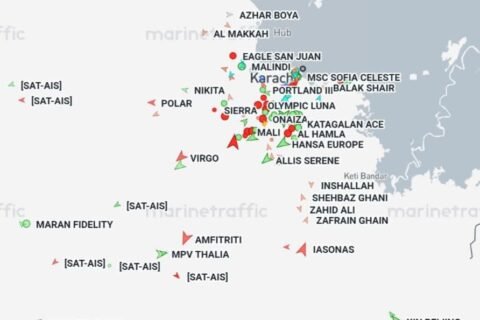
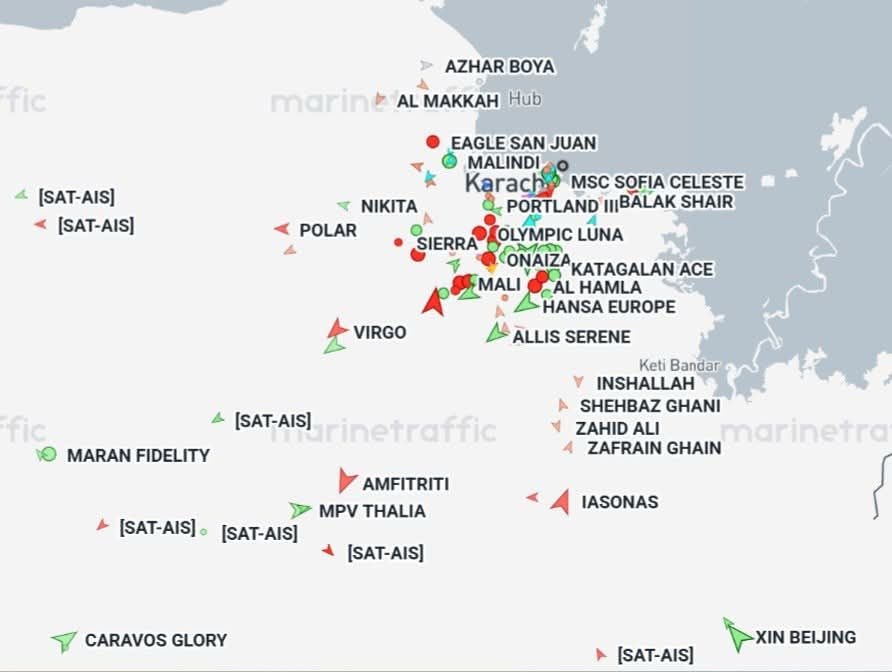
Web Desk: Shipping traffic at Karachi Port has surged in recent days as vessels divert from the Gulf amid rising security concerns linked to tensions involving Iran, port officials and industry sources said.
Long queues of containers have formed at the port, reflecting a sharp increase in arrivals as shipping companies seek safer alternatives to routes passing through the Strait of Hormuz, a critical oil and cargo corridor that has become increasingly volatile.
Several global shipping operators have begun re-routing vessels toward Karachi, citing safety risks in the Gulf region. As a result, Pakistan’s largest port has emerged as a key fallback hub for cargo transshipment.
Industry analysts said the shift highlights how quickly maritime logistics can respond to geopolitical instability. While diversions typically raise costs and transit times, companies appear willing to absorb the impact to ensure crew safety and cargo security.
The spike in redirected traffic has driven a sharp rise in transshipment activity at Karachi Port. Data indicates that the port handled approximately 8,300 twenty-foot equivalent units (TEUs) over the entire year of 2025.
However, in just the past 24 days, transshipment volumes have already reached about 8,860 TEUs, surpassing last year’s total. The surge underscores the scale and speed of the ongoing shift in regional shipping patterns.
The sudden influx of vessels and cargo has placed strain on port operations, with container backlogs and longer handling times reported. Logistics providers are working to manage congestion while maintaining turnaround efficiency.
Officials said contingency measures are under consideration to streamline operations and accommodate higher throughput if diversions persist.
Maritime traffic flows are likely to remain sensitive to developments in the Gulf. If tensions ease, shipping routes may gradually normalize. However, continued instability could cement Karachi’s role as a strategic alternative hub in the region.
For now, the port’s unexpected surge reflects how global trade networks adapt rapidly to shifting geopolitical risks.
Read more: Trump shares Ishaq Dar’s update on Pakistani ships in Strait of Hormuz