
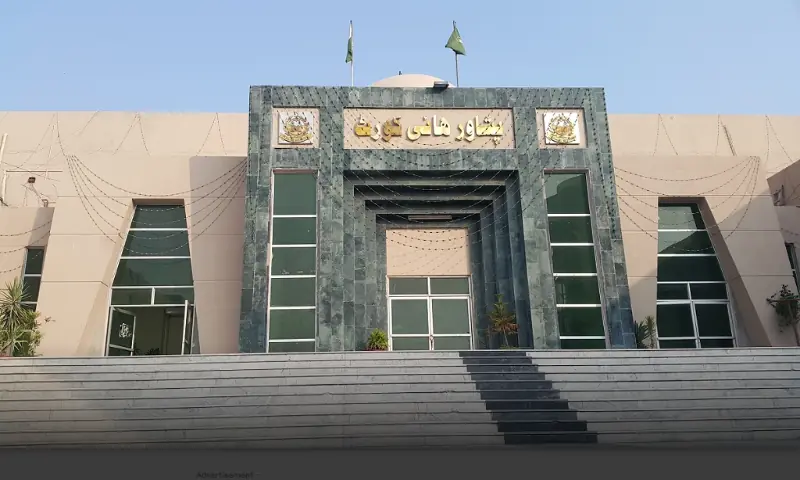
Web desk: The Peshawar High Court expressed strong displeasure while hearing petitions against road blockades organized to demand the release of PTI founder Imran Khan. As a result, the court summoned the Chief Secretary Khyber Pakhtunkhwa and the Inspector General of Police to appear personally.
A two member bench with Justice Ijaz Anwar and Justice Farah Jamshed conducted the hearing. During the session, the court asked officials how many individuals who blocked roads have FIRs registered. It also asked what practical steps the provincial government had taken by the fourth day of protests.
Justice Ijaz Anwar said that major highways remain blocked. Consequently, citizens face severe difficulties. He criticized the government for failing to act. Furthermore, he noted that authorities claim the blockades relate to Khan’s medical treatment. However, the court has not recognized them as political representatives.
Advocate General Shah Faisal requested additional time to compile the required data. In response, the court told him that officials could join the protestors if they wished. Nevertheless, ordinary citizens should not suffer due to the blockades.
The petitions state that Pakistan Tehreek-e-Insaf blocked the Motorway, the GT Road, and other key highways. Therefore, the free movement of citizens suffered heavily. Petitioners emphasized that Article 15 of the Constitution guarantees every citizen the right to move freely. Accordingly, the blockades violated this fundamental right.
One petition came from Provincial Assembly member Sobia Shahid. Another came from Advocate Tariq Afghan. Additionally, the court included the provincial government, the Inspector General of Police, the PTI provincial president and the National Highways Authority as respondents.
Barristers Huzifa Ahmed and Yasin Raza explained that the blockades at Swabi Anbar Interchange, near Attock Bridge on GT Road, and on the Dera Ismail Khan Motorway disrupted interprovincial travel. As a result, patients, lawyers, traders and ordinary citizens faced serious travel difficulties. Moreover, delivery of essential goods slowed down.
The court emphasized that citizens have the right to protest. However, complete closure of highways must not harm others’ fundamental rights. Therefore, the Chief Secretary and Inspector General must personally submit a detailed report.
In the next hearing, the court will review the provincial government’s actions, FIR registrations, and the reopening of blocked roads. Consequently, citizens continue to follow this important case closely.
Read more: Imran Khan enjoys exclusive privileges at Adiala Jail, report


