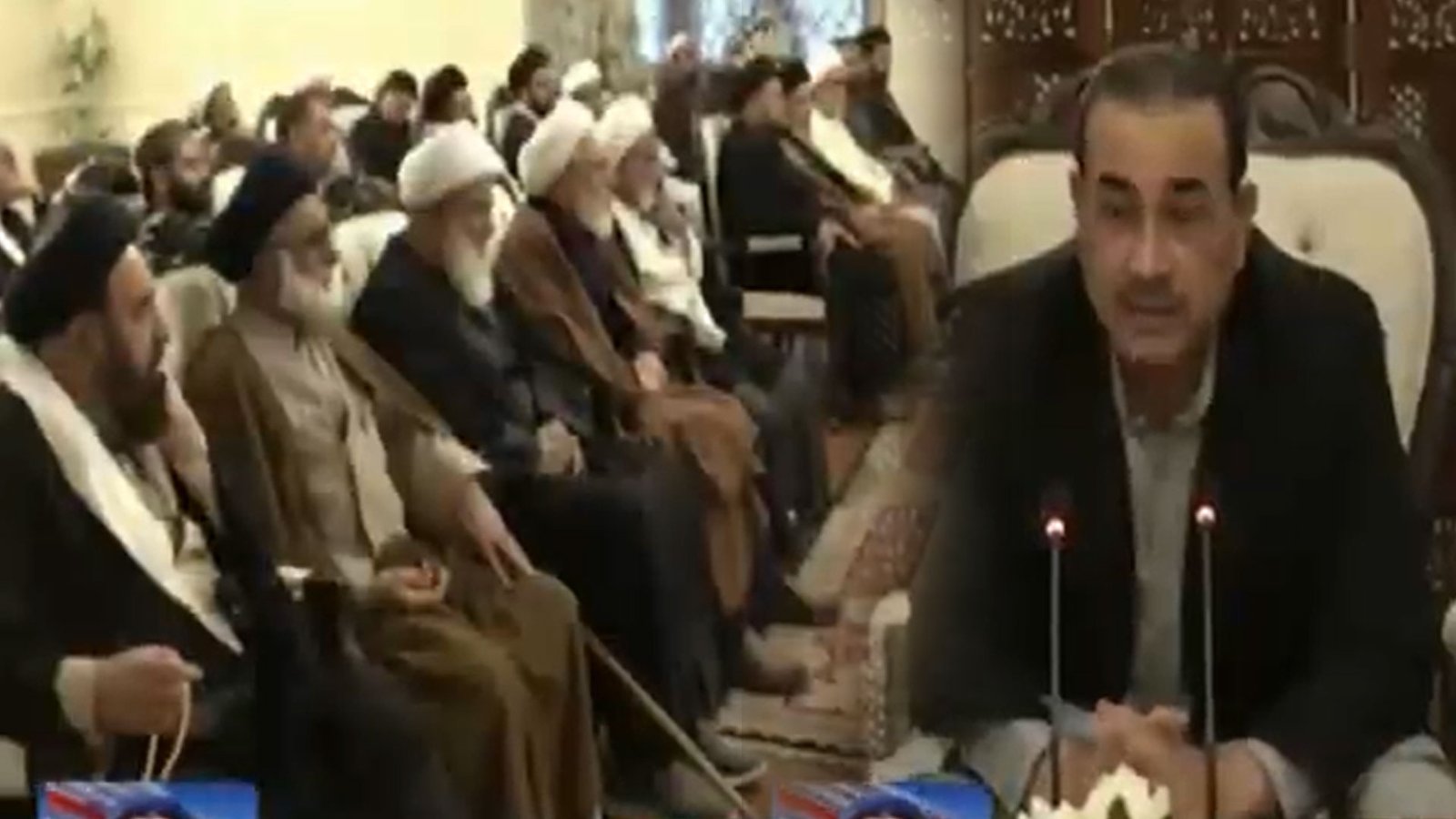
Web Desk: Pakistan’s army chief Field Marshal Syed Asim Munir met prominent Shia religious scholars in Rawalpindi on Thursday to discuss national security, sectarian harmony and the evolving regional situation, the military said.
The meeting comes at a time of heightened tensions in the region, with officials warning of potential spillover effects on Pakistan’s internal stability.
According to the military’s media wing, the Inter-Services Public Relations (ISPR), participants held detailed discussions on internal and external challenges facing the country, particularly the risks posed by sectarian divisions and the spread of misinformation on social media.
Munir individually greeted the scholars in a gesture participants described as reflecting goodwill and mutual respect, underscoring efforts to build trust across religious communities.
Addressing the gathering, CDF Asim Munir stressed the critical role of religious leaders in promoting unity, tolerance and national cohesion. He urged scholars to take a leading role in countering sectarian narratives and false information to prevent unrest.
He also called on them to discourage any attempts to incite violence in Pakistan in response to incidents occurring in other countries, warning that authorities would act against any such activities.
The army chief highlighted ongoing counterterrorism efforts under “Operation Ghazab-ul-Haq,” saying security forces were continuing indiscriminate action against terrorists.
Pakistan, he said, would not tolerate any form of terrorism on its soil and would target hostile elements wherever necessary.
Munir also reiterated Islamabad’s message to Afghanistan’s Taliban authorities, urging them to prevent the use of Afghan territory against Pakistan, dismantle militant safe havens and stop cross-border infiltration.
He added that Pakistan was actively engaged in diplomacy to reduce regional tensions and fulfill its responsibilities toward maintaining global peace.
At the same time, he appealed to religious leaders to promote interfaith harmony and prevent the exploitation of external events to fuel domestic discord.
The participating scholars emphasized the need for peace, stability and unity, condemning terrorism and sectarian violence. They assured full cooperation with law enforcement agencies and pledged to promote messages of tolerance and brotherhood within their communities.
Media reports said authorities are considering a joint strategy to strengthen sectarian harmony, involving closer coordination among religious scholars, security institutions and the government.
The meeting sends a clear signal, analysts say, that Pakistan is seeking to reinforce internal cohesion while confronting both domestic and external security challenges.
Read more: ‘Afghanistan has always suffered due to unnecessary wars’: Afghan journalist Sami Yousafzai