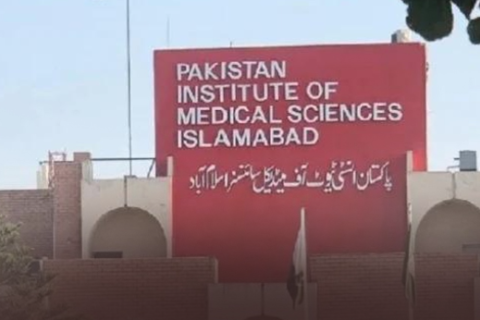
Web Desk: Families of newborns who died in a fire at the Pakistan Institute of Medical Sciences (PIMS) have demanded a broader investigation into the tragedy, questioning not only what caused the blaze but also why the babies could not be evacuated in time.
The families said investigators should establish how hospital staff responded during the first critical minutes, whether emergency procedures were followed and why the hospital’s response system failed to protect vulnerable newborns.
Relatives said the investigation should determine where doctors, nurses and other emergency personnel were when smoke began filling the nursery.
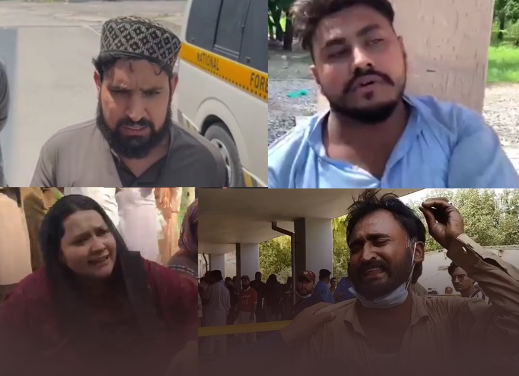
One bereaved father said he arrived at the hospital after learning about the fire and found the situation chaotic, with heavy smoke and distressed parents trying to reach their children.
He called for investigators to establish what hospital staff did immediately after the fire started and whether they followed established emergency procedures.
Another relative questioned why newborns were not moved to safety sooner if doctors, nurses and other employees were able to leave the affected area.
The families said investigators should produce a detailed record showing when staff members became aware of the fire, who responded first and what steps they took to evacuate the infants.
The condition of the nursery’s doors and emergency exits has emerged as another major concern.
Witnesses questioned why emergency access and evacuation routes were not immediately usable during the fire and urged investigators to establish whether the doors were functioning normally when the blaze broke out.
Families said emergency exits are among the most important safeguards in a hospital and that any failure involving those exits must be examined, including who was responsible for maintaining them.
The concerns follow findings by the Capital Development Authority’s Fire and Disaster Management department that fire and life-safety arrangements at the nursery were inadequate. The CDA report said emergency exits were locked from the outside and obstructed, hampering evacuation and rescue efforts.
Relatives have also questioned the hospital’s maintenance system, particularly the inspection of electrical wiring, fire alarms, emergency exits and firefighting equipment.
The grandfather of one of the children who died said investigators should establish when the nursery’s electrical and fire-safety systems were last fully inspected and who was responsible for maintenance.
He also called for authorities to determine whether any earlier faults had been reported and, if so, why they were not corrected.
Families are also seeking details of PIMS’ procedures for dealing with fires and other emergencies.
A father who lost his child said investigators should examine the hospital’s standard operating procedures and determine whether staff followed them during the incident.
He said the inquiry should cover the activation of fire alarms, emergency notifications, electrical or gas safety measures, evacuation of patients, communication with rescue services and access to emergency routes.
The families also questioned whether hospital employees had received adequate training or participated in emergency drills.
Relatives have called for a detailed timeline of the incident, saying even a few minutes can make a crucial difference when dealing with newborns.
They want investigators to establish when the fire started, who first reported it, when hospital officials were alerted, when any alarm was activated, when rescue services were contacted, when firefighters arrived and when staff began evacuating the infants.
The families said determining the sequence of events would help establish whether delays or failures contributed to the deaths.
Meanwhile, the aunt of the only newborn reported to have survived the nursery fire has challenged the hospital administration’s account of the rescue.
Speaking to the media, she said she not a doctor pulled the baby from the burning ward.
She said she was at the hospital when the fire started and went toward the ward after seeing smoke and panic. According to her account, a female doctor ran toward her and told her to call a man after being asked what had happened.
The woman said she then rushed inside after telling the doctor that her niece was still in the ward. She said she picked up the baby herself and suffered burns to her hair and shoulder while escaping.
She further alleged that no doctor was inside the nursery when she entered and that medical staff had fled the area. She said a male doctor also left the ward.
The woman said her sister had undergone surgery and that she carried both her sister and the newborn to safety.
She also accused the hospital administration of giving conflicting accounts of how the baby was rescued, saying officials alternately told her that she had taken the wrong child or that a nurse had rescued the newborn.
PIMS had earlier said that one female doctor managed to save one baby from among 16 newborns in the ward, while the remaining infants died. Rescue sources, meanwhile, said the fire began at about 6:45 a.m., reportedly after an air-conditioning compressor exploded.
The affected families have called for the inquiry to go beyond identifying the source of the fire.
They want investigators to examine the conduct of hospital management, doctors, nurses, security personnel, maintenance teams and those responsible for fire safety and emergency response.
At the same time, they said no individual should be declared responsible before the investigation is completed and evidence is assessed.
The families said their children could not be brought back, but a transparent investigation could determine where the system failed and help prevent similar tragedies in hospitals across Pakistan.
They have urged the government to make the inquiry report public, take legal action if negligence is established and conduct a nationwide review of hospital fire-safety systems, emergency exits, alarms, electrical installations and staff preparedness.
Read more: Locked exits, inadequate safety measures caused havoc at PIMS, CDA inquiry