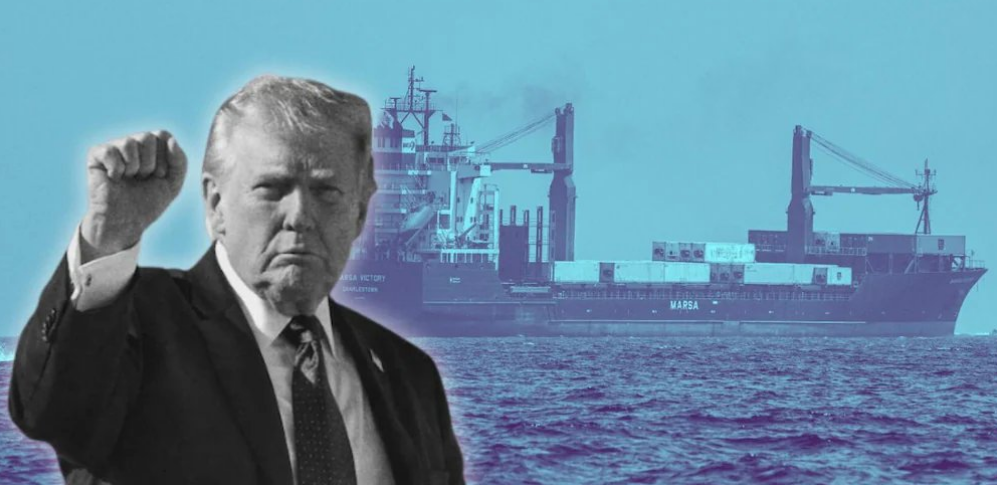
Web Desk: US President Donald Trump said on Wednesday that Washington could halt its military campaign against Iran within two to three weeks, even as his administration weighs the economic risks of a sharp surge in global oil prices.
Moreover, the White House scheduled a prime-time address later in the day, signalling a pivotal moment in the conflict that has rattled energy markets and disrupted global supply chains.
Speaking to reporters, Trump said a diplomatic agreement with Tehran would not be necessary for the United States to scale back its operations.
“Iran doesn’t have to make a deal,” he said, adding that US forces could withdraw “very soon … maybe two weeks, maybe three.”
Furthermore, Trump indicated that Washington would step back once it determines Iran’s nuclear capabilities have been significantly degraded. He also suggested that responsibility for securing the Strait of Hormuz could shift to countries that depend on the vital waterway for oil shipments.
At the same time, administration officials are increasingly focused on the economic fallout from the conflict, particularly the risk of rising energy prices.
According to sources familiar with internal discussions, White House aides are evaluating scenarios in which oil prices could climb to $150 per barrel or higher if the war extends further. Some projections discussed within the administration place $100 per barrel as a near-term baseline, with the possibility of even steeper increases not ruled out.
In addition, officials are examining potential responses to contain costs, including the use of emergency powers. Industry sources described the effort as an “all hands on deck” approach to prevent a major price spike.
Meanwhile, the discussions are being coordinated through the National Energy Dominance Council, which brings together key government departments including Defense, Energy, Commerce and State.
Officials stressed that contingency planning does not necessarily mean the administration expects worst-case scenarios to materialize. However, they acknowledged growing concern over tightening supplies and market volatility.
These deliberations come as US gasoline prices have climbed to an average of $4 per gallon. At the same time, emerging shortages in parts of Asia are expected to ripple toward American markets in the coming weeks, adding further pressure.
Consequently, the administration faces a delicate balancing act between winding down military operations and stabilizing energy markets already under strain.
While Trump expressed confidence that the conflict could soon reach a turning point, uncertainty continues to surround both the trajectory of the war and its economic consequences.
Nevertheless, the anticipated presidential address is expected to provide further clarity on Washington’s next steps as global attention remains fixed on the evolving crisis.
Read more: Is NATO finally on the brink? US-Europe rift deepens over Iran war